Quick answer: A standard leash offers more consistent control and a fixed walking distance, while a retractable leash allows a dog to move farther away when the surroundings permit it. The better fit depends on your walking environment, your dog’s leash habits, and how much control you need during everyday outings. Understanding their differences can help you choose a leash style that suits your routine.
Retractable vs Standard Leash: Understanding the Difference
The main difference between a retractable and a standard leash is how much freedom of movement each provides.
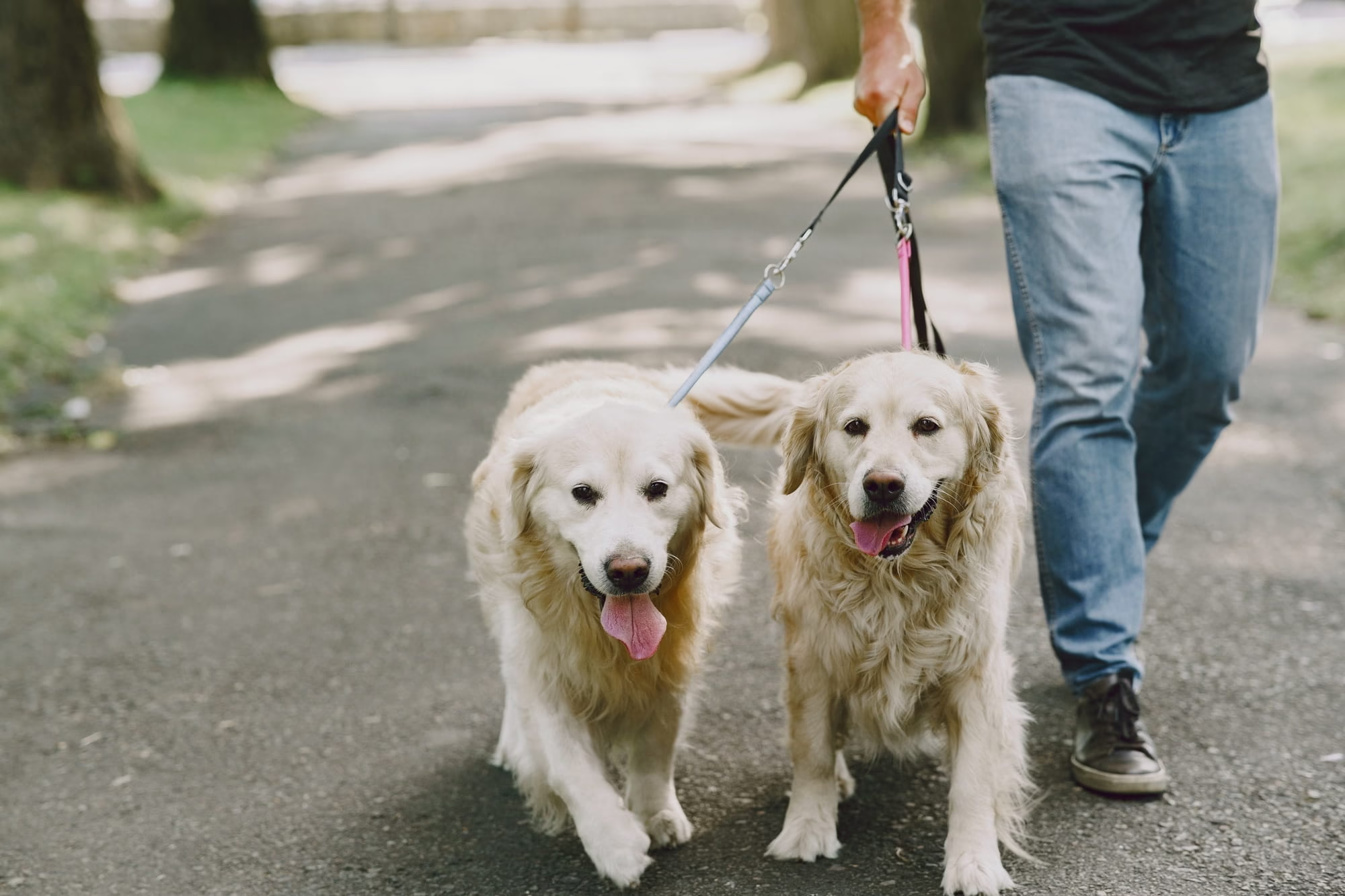
A standard leash has a fixed length. It connects to your dog’s collar or harness and keeps the distance between you and your dog relatively consistent.
A retractable leash uses a spring-loaded mechanism inside a handle. The leash extends as your dog moves away and retracts when your dog comes closer. Most models also include a button or locking mechanism to control the available length.
Both styles are designed for everyday dog walking, but they create different walking experiences.
1. What Is a Standard Dog Leash?

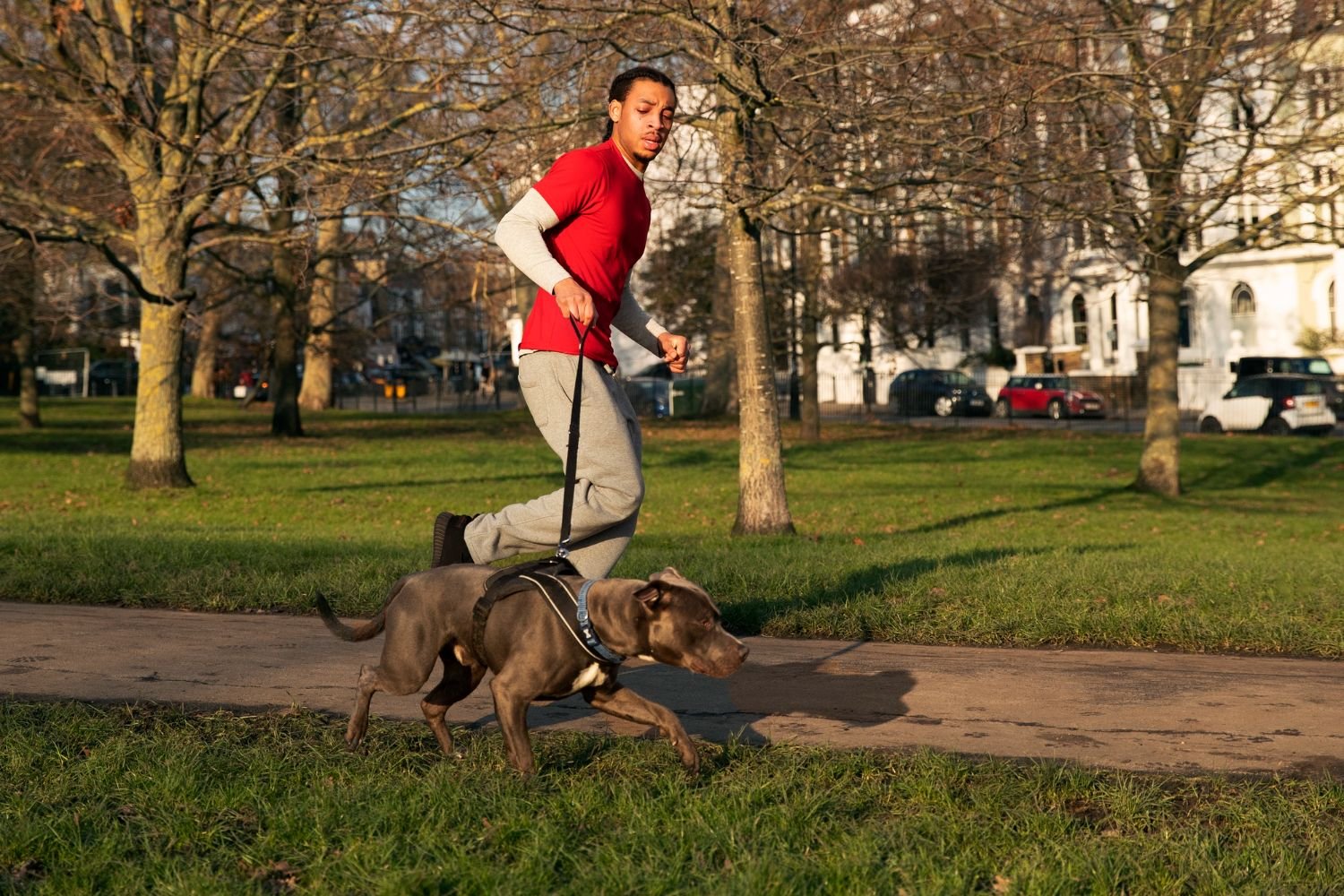
A standard dog leash is a fixed-length lead commonly made from nylon, leather, rope or similar materials. It gives the dog a defined amount of space and allows the owner to maintain a consistent distance.
Standard leashes come in different lengths, widths and designs. Some are lightweight for everyday walks, while others are made with thicker materials or additional handles.
Benefits of a Standard Leash
- Consistent distance: Your dog stays within the leash’s fixed length, making the walking space predictable.
- Straightforward handling: There is no retracting mechanism or locking button to operate.
- Useful in busy places: A fixed length can make it easier to keep your dog close in crowded areas.
- Simple maintenance: Most standard leashes can be checked and cleaned without dealing with a mechanical housing.
- Different handling styles: Some designs include padded handles, traffic handles or adjustable lengths.
Limitations of a Standard Leash
- Limited movement: Your dog cannot move beyond the leash’s fixed length.
- Less flexibility: You may need to change your position or use a different leash length when moving between open and narrow spaces.
- Material wear: Fraying, damaged stitching and worn clips can affect the leash’s condition over time.
2. What Is a Retractable Dog Leash?
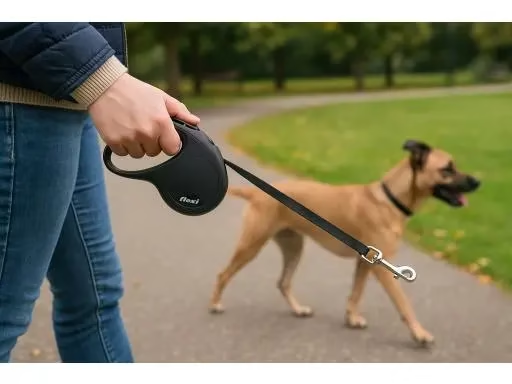
A retractable dog leash contains a cord or tape wound around a spool inside a handheld casing. As the dog moves away, the leash extends. When the dog returns, the mechanism draws the extra length back into the handle.
Many retractable leashes include a locking button that allows the user to set or limit the extension.
The available extension varies by design, so it is important to check the stated length rather than assume all retractable leashes provide the same distance.
Benefits of a Retractable Leash
- Adjustable distance: The dog can move closer or farther away within the leash’s available range.
- Flexible movement: The extension can be useful in suitable open spaces where additional walking room is available.
- Compact handle: The leash and its mechanism are contained in one handheld unit.
- Variable length: The locking mechanism allows the user to limit how far the leash extends.
Limitations of a Retractable Leash
- More complicated handling: The user must manage the extension and locking mechanism while walking.
- Thin cord or tape: Some designs have narrow leash material that can cause friction injuries if it wraps around skin or clothing.
- Potential tangling: Extended leash material can become caught around legs, objects or other dogs.
- Mechanical wear: The internal spring, spool and locking components need regular inspection.
- Less predictable distance: If the leash is extended, the dog may be farther away than expected.
3. Retractable vs Standard Leash: Key Differences
The following table summarizes the main differences between the two styles.
| Feature | Standard leash | Retractable leash |
| Length | Fixed | Extendable |
| Walking distance | Consistent | Adjustable |
| Handling | Straightforward | Requires mechanism control |
| Close-distance control | Easier to maintain | Depends on extension and locking |
| Design | Usually simple | Contains internal mechanism |
| Maintenance | Material and clip inspection | Material and mechanical inspection |
| Movement flexibility | Limited by fixed length | More adjustable |
Neither style is automatically suitable for every dog or walking environment. The practical difference comes down to how much distance you want to manage and how predictable the surroundings are.
4. Which Leash Fits Different Walking Environments?
The environment can influence how practical each leash style is. A leash that feels manageable in a quiet open area may be inconvenient on a narrow sidewalk.
Walking on Busy Streets
Busy streets often involve pedestrians, cyclists, vehicles and other dogs. Keeping a dog close can make it easier to manage sudden changes in the surroundings.
A standard leash provides a fixed walking distance. With a retractable leash, the user needs to keep the extension short and use the locking mechanism appropriately.
Walking in Parks and Open Spaces
Open parks provide more room to move, but they can also contain other visitors, children, wildlife and dogs.
A retractable leash allows variable distance, but extra length does not mean every area is suitable for extended walking. Local leash rules and the surrounding activity still matter.
Walking on Narrow Paths
Narrow paths, crowded pavements and shared walkways leave less room for a dog to move around.
A standard leash offers a consistent distance, which can make passing other people and dogs more predictable. A fully extended retractable leash may create additional obstacles for people using the same path.
Walking in Quiet Residential Areas
Residential walks can include quiet streets, driveways, parked cars and occasional pedestrians.
Either leash style can be used in appropriate circumstances. The important consideration is whether the dog can remain at a manageable distance when the surroundings change.
5. Important Factors to Consider Before Choosing a Leash
Instead of focusing only on leash style, consider how it fits your everyday walking routine.
Your Dog’s Walking Habits
Think about how your dog behaves during walks. Does your dog usually stay close, move from side to side, or frequently pull toward interesting smells?
A fixed-length leash creates a consistent boundary. A retractable leash allows more distance but requires the owner to manage that extra movement.
Your Walking Environment
Consider where most walks take place:
- Busy streets and crowded pavements
- Quiet residential roads
- Parks and open spaces
- Narrow walking paths
- Areas with other dogs and pedestrians
The amount of available space can make a significant difference to how convenient each leash feels.
Leash Material and Construction
Check the material, stitching, handle and attachment clip. The leash should be comfortable to hold and appropriate for the dog’s size and walking habits.
For retractable designs, also inspect the casing, extension material, locking button and retraction mechanism.
Storage and Everyday Handling
A standard leash is usually easy to hang or fold for storage. A retractable leash has a larger handle because it contains the internal mechanism.
Consider how each design fits into your daily routine, especially if you carry other walking essentials.
6. Leash Safety and Maintenance
Regardless of the style, a leash needs regular inspection. Everyday wear can affect its condition over time.
Standard Leash Care
- Check the leash for fraying, cuts and weakened stitching.
- Inspect the clip for rust, bending or difficulty closing.
- Clean the material according to its care instructions.
- Check the handle for loose or damaged sections.
- Replace a leash if its material or attachment hardware becomes unreliable.
Retractable Leash Care
- Check the cord or tape for cuts, fraying and unusual wear.
- Test the locking button according to the manufacturer’s instructions.
- Inspect the casing for cracks or damage.
- Watch for irregular extension or retraction.
- Avoid opening or modifying the internal mechanism unless the manufacturer provides instructions for doing so.
General Walking Safety
Keep the leash away from your fingers, legs and other people’s bodies when it is under tension. Never allow an extended leash to create a trip hazard across a shared path.
Avoid wrapping leash material around your hand. Maintain awareness of nearby pedestrians, dogs, vehicles and other obstacles.
A retractable leash should not be treated as a substitute for a secure walking routine. Follow local leash requirements and keep your dog at a manageable distance.
7. Common Mistakes to Avoid
A few everyday mistakes can make either leash style less convenient or less safe.
- Choosing based only on appearance: Material quality, construction and handling matter more than appearance.
- Ignoring leash condition: Small signs of wear can become more serious if left unchecked.
- Allowing excessive extension in crowded areas: Long leash lengths can interfere with other people and dogs.
- Using a damaged locking mechanism: A retractable leash should not be relied on if its lock or retraction system is not working properly.
- Assuming every leash suits every dog: Size, walking habits and the environment all affect practical use.
- Overlooking local rules: Some public spaces have specific leash-length or leash-type requirements.
Frequently Asked Questions
Is a retractable leash better than a standard leash?
Neither is universally better. A standard leash provides a fixed distance, while a retractable leash offers adjustable extension. Their suitability depends on the walking environment, the dog’s habits and the owner’s handling preferences.
Are retractable leashes suitable for crowded areas?
They require particular care in crowded areas because extended cord or tape can create tangling and tripping hazards. Keeping the leash short and maintaining control of the locking mechanism is important. Local rules may also restrict their use.
What is the main advantage of a standard dog leash?
Its main advantage is a consistent walking distance. The fixed length makes it easier to keep the dog close without managing an extension mechanism.
Do retractable leashes need special maintenance?
Yes. In addition to checking the cord or tape and attachment clip, inspect the casing, locking button and retraction mechanism. Follow the manufacturer’s care instructions.
How often should a dog leash be replaced?
There is no single replacement schedule for every leash. Check it regularly and replace it when you notice fraying, damaged stitching, weakened clips, cracks or unreliable mechanical parts.
Can a retractable leash be used for everyday walks?
It can be used in suitable environments where local rules allow it and the owner can manage its extension safely. The walking surroundings and the dog’s behaviour should always be considered.