Choosing pet-friendly flooring involves more than selecting a material that looks attractive. Dogs and cats bring different everyday challenges into a home, including muddy paws, loose fur, food spills, water splashes and scratches from nails.
Vinyl, tile and laminate each offer different advantages and limitations for homes with pets. Vinyl is available in comfortable, water-resistant designs, tile provides a hard surface that is relatively easy to clean, and laminate offers a wood-like appearance with varying levels of scratch and moisture resistance. However, their actual performance depends on the product, installation and maintenance.
Understanding these differences can help pet owners create a cleaner, more organized and comfortable living environment without overlooking their pets’ everyday needs.
Why Pet-Friendly Flooring Matters
Flooring is one of the most frequently used surfaces in a home. Pets walk, play, rest and sometimes eat on it, making its everyday characteristics important.
When considering pet-friendly flooring, a few practical factors deserve attention:
- Scratch resistance: Pet nails can leave marks on certain flooring surfaces, particularly when animals run or turn quickly.
- Moisture resistance: Water bowls, wet paws and occasional accidents can expose flooring to moisture.
- Cleaning requirements: Fur, dirt and food particles should be manageable with ordinary cleaning routines.
- Surface texture: Very smooth floors may offer less grip during everyday movement.
- Durability: Flooring should handle regular household activity without requiring constant repairs.
No flooring material is completely resistant to every type of damage. Its performance also depends on surface quality, protective coatings, installation and how it is maintained.
1. Vinyl Flooring for Pets

Vinyl flooring is a popular option in residential interiors because it is available in different colors, patterns and surface finishes. Some designs imitate natural wood or stone while providing a relatively simple surface to maintain.
For households with dogs and cats, vinyl flooring can be useful because many products have water-resistant surfaces and do not require complicated daily cleaning.
Benefits of Vinyl Flooring
- Moisture resistance: Many vinyl flooring products resist surface moisture, making everyday spills easier to manage.
- Simple cleaning: Loose fur, dust and dirt can generally be removed with sweeping or vacuuming.
- Variety of designs: Vinyl is available in different patterns, textures and finishes that suit various home interiors.
- Surface comfort: Compared with ceramic or porcelain tile, some vinyl floors feel slightly softer underfoot.
- Noise considerations: Certain vinyl flooring installations can produce less footstep noise than hard tile surfaces.
Limitations of Vinyl Flooring
Vinyl is not completely scratch-proof. Pet nails, furniture movement and sharp objects can leave marks, depending on the thickness and quality of its wear layer.
Some vinyl products can also be affected by excessive heat or unsuitable cleaning chemicals. Although many products resist surface water, moisture that enters through poorly sealed joints or installation gaps may create problems.
Everyday Maintenance
Regular sweeping helps prevent dirt and small particles from accumulating. Use a damp mop with a manufacturer-approved cleaner when necessary.
Clean spills promptly, avoid abrasive cleaning tools and check the flooring manufacturer’s instructions before using cleaning products.
2. Tile Flooring for Pets
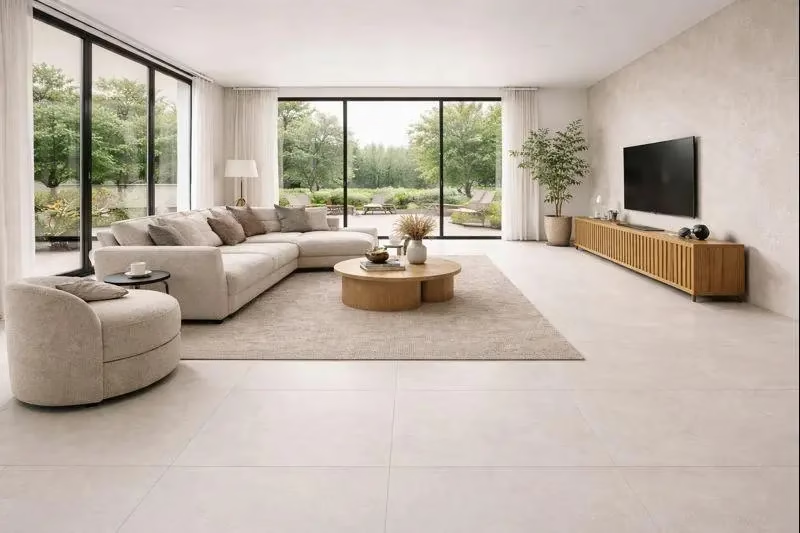
Tile flooring is commonly used in kitchens, hallways and other areas where regular cleaning is important. Ceramic and porcelain tiles provide hard surfaces that can handle everyday household activity.
Their smooth, non-porous surfaces, when properly finished and maintained, are generally straightforward to clean. However, the type of tile and its surface finish make a difference.
Benefits of Tile Flooring
- Easy surface cleaning: Fur, dirt and many everyday spills can be removed without much difficulty.
- Hard surface: Quality ceramic and porcelain tiles generally handle ordinary foot traffic well.
- Moisture resistance: Many tiles have low water absorption, particularly porcelain varieties.
- Long-term appearance: Properly installed and maintained tiles can retain their appearance for many years.
- Different finishes: Tiles are available in matte, textured and polished designs.
Limitations of Tile Flooring
Tile is a hard surface, which means it does not provide much cushioning compared with some other flooring materials.
Polished tiles can also become slippery, especially when wet. This may make everyday movement less comfortable for pets.
Grout lines require additional attention because dirt and residue can collect between tiles. Grout may need periodic cleaning and appropriate sealing, depending on its type.
Everyday Maintenance
Sweep or vacuum regularly to remove loose fur and dirt. Use a suitable floor cleaner and pay attention to grout lines.
Wipe up spills instead of allowing them to remain on the surface. Check grout and tile joints periodically for visible wear or damage.
3. Laminate Flooring for Pets

Laminate flooring is designed with multiple layers, typically including a decorative surface, a core layer and a protective top layer.
It is often selected for its wood-like appearance and variety of residential designs. Some laminate products also feature protective surface coatings intended to improve resistance to everyday wear.
For pet owners, its performance depends heavily on the specific product and its moisture protection.
Benefits of Laminate Flooring
- Wood-like appearance: Laminate provides the visual appearance of wood in different colors and patterns.
- Protective surface: Certain products have wear layers designed to resist everyday scratches and surface marks.
- Cleaning convenience: Regular sweeping and appropriate damp cleaning can help maintain its appearance.
- Design variety: It is available in different plank styles, textures and finishes.
- Residential durability: Quality laminate can handle ordinary household foot traffic when properly installed and maintained.
Limitations of Laminate Flooring
Laminate is not automatically waterproof. Traditional products can be damaged when water enters the seams or reaches the core layer.
Pet accidents and prolonged moisture exposure can cause swelling, lifting or other damage, particularly around joints.
Some laminate finishes can also become slippery, depending on their texture. Pet nails and dragged furniture may leave visible marks over time.
Everyday Maintenance
Remove loose fur and dirt regularly using a suitable vacuum or soft broom.
Use only a lightly damp mop when permitted by the manufacturer. Avoid excessive water, steam cleaning and harsh chemicals unless the product instructions specifically allow them.
Clean spills and pet accidents promptly, paying particular attention to the edges and joints between planks.
Understanding the Differences Between Vinyl, Tile and Laminate
Although all three materials are used in residential homes, their everyday characteristics are different.
| Flooring feature | Vinyl | Tile | Laminate |
| Surface moisture resistance | Generally good | Generally good | Varies by product |
| Scratch resistance | Varies by wear layer | Generally hard, but can chip | Varies by protective layer |
| Surface hardness | Relatively flexible | Very hard | Firm |
| Cleaning | Generally easy | Generally easy | Requires moisture control |
| Grout maintenance | Not applicable | May be required | Not applicable |
| Design options | Extensive | Extensive | Extensive |
| Water damage risk | At joints and edges | At grout or installation gaps | At seams and core |
These are general material characteristics, not guarantees. Product specifications, installation quality and maintenance practices can affect actual performance.
What to Consider Before Choosing Pet-Friendly Flooring
Selecting flooring for a home with dogs and cats requires considering how the space is used every day.
1. Consider Your Pet’s Daily Activities
A home with an active dog may experience more floor contact, nail movement and dirt around entryways. Cats may leave loose fur around resting areas and occasionally scratch surfaces.
Think about where your pets spend most of their time. This helps identify which flooring characteristics matter most in different rooms.
2. Check Surface Grip and Texture
Flooring appearance does not always indicate how much grip it provides.
Highly polished tile and smooth laminate may feel slippery, particularly when wet. Textured finishes can offer a different level of surface traction.
Examine the actual flooring sample rather than relying only on photographs.
3. Understand Moisture Protection
Water bowls, wet paws and accidental spills are ordinary parts of living with pets.
Check whether the flooring is water-resistant or waterproof. These terms are not interchangeable.
Also examine the manufacturer’s instructions regarding seams, joints, cleaning and moisture exposure.
4. Review Cleaning Requirements
Different flooring materials have different maintenance needs.
Before selecting a material, check:
- Which cleaning products are permitted?
- Is damp mopping allowed?
- Does the surface require special maintenance?
- Are grout lines or flooring joints difficult to clean?
- What happens if moisture remains on the surface?
Understanding these details can make everyday household cleaning easier.
5. Examine Installation and Warranty Information
Even a durable flooring material can develop problems if it is installed incorrectly.
Review installation requirements, moisture protection and warranty exclusions. Some warranties have specific conditions concerning scratches, stains, water damage or household use.
This information helps clarify what maintenance and protection the flooring requires.
How to Maintain Flooring in a Home With Dogs and Cats
Regardless of the flooring material, a consistent cleaning routine helps maintain a more organized home.
Here are some practical habits:
- Sweep or vacuum regularly to remove pet hair and loose dirt.
- Clean muddy paw marks before dirt spreads into other rooms.
- Wipe up water around feeding stations.
- Remove spills and pet accidents promptly.
- Use suitable cleaning products recommended for the flooring.
- Keep pet nails appropriately maintained as part of normal grooming.
- Place washable mats around feeding and water stations.
- Check floors periodically for scratches, loose sections or damaged joints.
These simple habits can reduce everyday mess and help maintain the appearance of different flooring surfaces.
Frequently Asked Questions (FAQs)
1. Is vinyl flooring suitable for homes with dogs and cats?
Many vinyl flooring products are suitable for everyday use in homes with pets. Their surface moisture resistance and relatively simple cleaning requirements can be useful. However, scratch resistance and surface grip vary between products.
2. Does tile flooring get scratched by dog nails?
Ceramic and porcelain tiles are generally hard surfaces and resist ordinary scratching. However, they are not completely damage-proof. Heavy impacts, abrasive particles and certain objects can cause scratches or chips.
3. Can pet accidents damage laminate flooring?
Yes. Traditional laminate flooring can be damaged if urine or other liquids enter the joints and reach its core. Some newer products offer enhanced moisture protection, but prompt cleaning remains important.
4. Is textured flooring better than polished flooring for pets?
Textured flooring can provide more surface grip than some highly polished finishes. However, the actual traction depends on the material, texture and whether the surface is wet or dry.
5. What are the disadvantages of tile flooring in a pet-friendly home?
Tile has a hard surface that provides little cushioning. Some polished finishes can also be slippery, while grout lines require additional cleaning. These characteristics are worth considering when planning pet living spaces.
6. Can vinyl flooring become damaged by pet nails?
Yes. Repeated nail contact can leave marks on vinyl, particularly on products with thinner or less durable wear layers. The level of resistance depends on the product’s construction and surface protection.
7. Does laminate flooring require special cleaning products?
Cleaning requirements depend on the manufacturer’s instructions. Many laminate floors should be cleaned with minimal moisture and suitable cleaning solutions. Excessive water and steam can damage certain products.
8. What should pet owners check before installing new flooring?
Pet owners should examine surface grip, scratch resistance, moisture protection, cleaning requirements, installation details and warranty conditions. Looking at physical samples can also help them understand the flooring’s actual texture and finish.