Few things are more frustrating for a dog than an itchy ear. You may notice your dog shaking their head repeatedly, scratching one ear with a back foot, rubbing their face against furniture, or suddenly becoming uncomfortable when you touch around their ears.
Sometimes the cause is simple irritation. Other times, it can be an ear infection, allergies, foreign material, or parasites such as ear mites.
Ear mites in dogs are caused by tiny parasites called Otodectes cynotis. They live mainly in the external ear canal and can cause significant itching and inflammation. They are more common in cats than dogs, but dogs can absolutely become affected, particularly when they have close contact with an infected animal.
The good news is that ear mites are treatable.
The important part is making sure you are actually dealing with mites before putting products into your dog’s ears. Many ear problems look remarkably similar from the outside, and using the wrong treatment can make an already irritated ear worse.
Here is how to recognize the signs, understand what your veterinarian may look for, and handle basic ear care safely while knowing when veterinary attention is needed.
What Exactly Are Ear Mites?
Ear mites are microscopic parasites that live mainly in the external ear canal and feed on epidermal debris.
The species most commonly associated with dogs and cats is Otodectes cynotis. These mites can cause inflammation, itching, wax buildup, and discharge inside the ear. They can also sometimes be found on other parts of the body.
Ear mites spread primarily through close contact between animals.
That means a dog can potentially pick them up from an infected cat, dog, or another susceptible animal. In households with several pets, treating only the animal showing symptoms may allow the problem to continue circulating.
This is one reason veterinary guidance matters.
The Common Signs of Ear Mites in Dogs
The symptoms can range from mild irritation to severe inflammation.
Watch for several signs occurring together rather than relying on one symptom alone.
Frequent Head Shaking
A dog with an irritated ear may shake their head much more frequently than usual.
You might notice this after sleeping, after playing, or seemingly for no reason.
Occasional head shaking is normal. Repeated shaking throughout the day is different and deserves attention.
Constant Ear Scratching
Your dog may repeatedly scratch at one or both ears.
Some dogs become so uncomfortable that they scratch hard enough to create small wounds around the ear flap.
Dark Ear Discharge
One of the signs commonly associated with ear mites is a dark brown or almost black, crumbly discharge.
It is sometimes described as looking similar to coffee grounds.
However, dark discharge does not prove that mites are present. Ear infections can also produce significant discharge, which is why diagnosis matters. Merck Veterinary Manual notes that dark brown cerumen can occur with ear mites, while secondary bacterial or yeast infections may also develop.
Redness and Inflammation
Look at the visible part of the ear.
An irritated ear may appear red, swollen, or warmer than usual.
Your dog may also pull away when you touch it.
Rubbing the Face or Ear
Some dogs prefer rubbing their face against carpets, furniture, walls, or their own paws rather than scratching directly.
If this behavior suddenly becomes frequent, check the ears.
Ear Drooping
A dog with painful or inflamed ears may carry one ear differently.
A normally upright ear may droop, particularly when the inflammation is uncomfortable.
Ear Mites or an Ear Infection?
This is where many pet parents get into trouble.
Ear mites are only one possible cause of ear irritation.
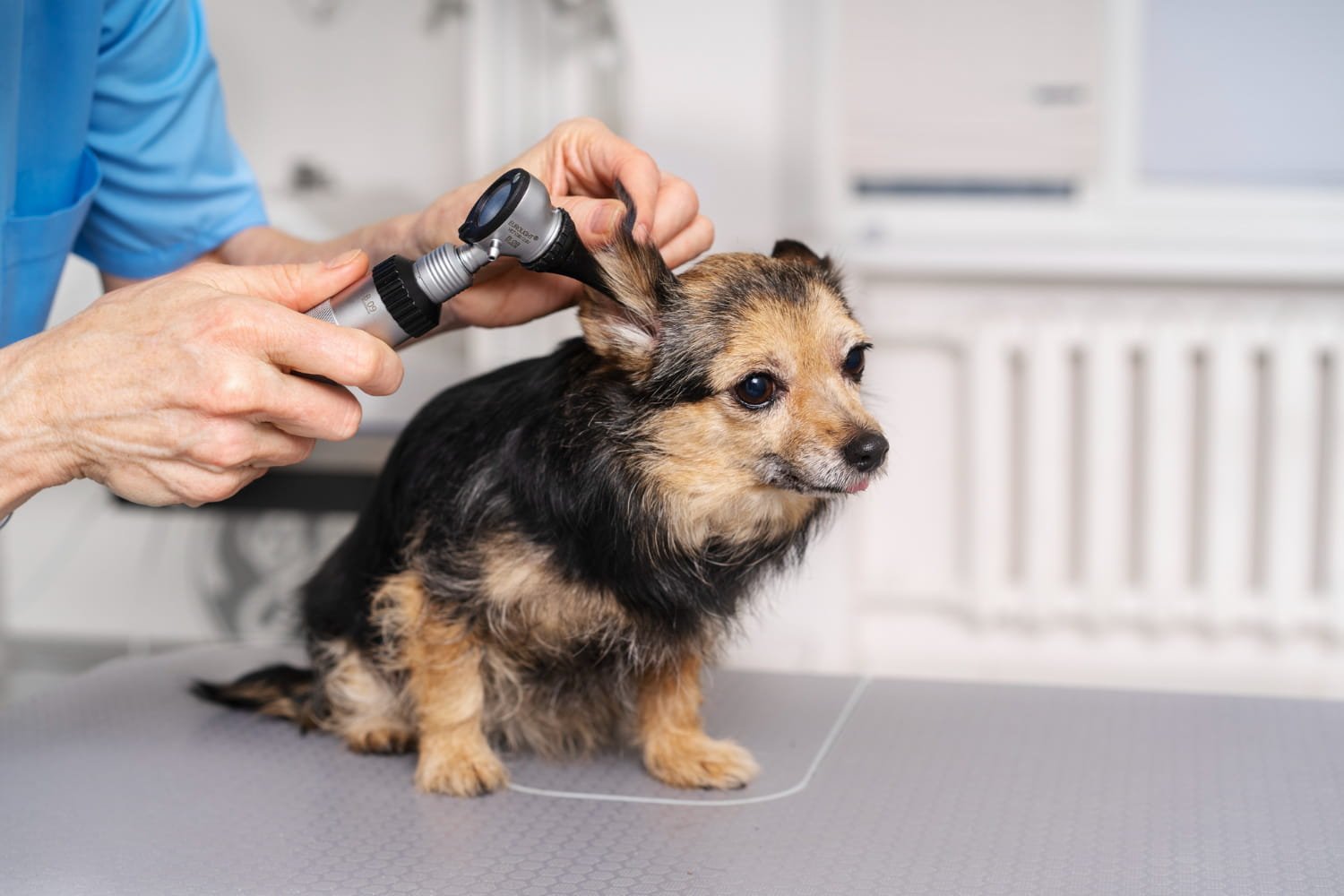
Allergies, yeast, bacteria, foreign material, moisture, and other conditions can produce similar symptoms. Veterinary diagnosis of external ear inflammation may involve examining the ear with an otoscope and evaluating ear discharge under a microscope.
So if your dog has itchy ears, do not automatically assume it is an infestation.
The same dark discharge, redness, odor, or scratching can appear with other ear problems.
That is why treating the suspected condition rather than the actual condition can sometimes make the situation worse.
Step 1: Examine the Ear Without Digging Into It
If your dog allows it, gently lift the ear flap and look at the visible area.
Do not push cotton swabs, fingers, tweezers, or other objects down the ear canal.
You are simply looking for obvious changes.
Check for redness, swelling, unusual discharge, crusting, odor, wounds, or anything that looks different from your dog’s normal ears.
Also pay attention to your dog’s reaction.
If they pull away sharply, cry, growl, or seem to be in significant pain, stop examining the ear and arrange a veterinary appointment.
Painful ears can become more irritated when repeatedly handled.
Step 2: Consider Recent Contact With Other Animals
Think about your dog’s recent interactions.
Has your dog recently spent time with cats, dogs, puppies, kittens, shelter animals, or animals whose health history you do not know?
This information can be useful for your veterinarian because ear mites are contagious between susceptible animals through close contact.
If you have several pets at home, observe all of them.
One animal may show obvious symptoms while another appears completely normal.
Step 3: Have the Diagnosis Confirmed
This is the most important step.
A veterinarian can examine the ear canal and collect a sample of the discharge.
Ear mites may be visible during an otoscopic examination or identified by examining ear discharge or debris under a microscope.
Sometimes the mites are not immediately obvious.
Your veterinarian may therefore consider the overall symptoms, examination findings, exposure history, and other possible causes.
This distinction matters because treating an ear infection as if it were simply mites may leave the actual problem untreated.
Step 4: Clean the Ears Only as Recommended
Once ear mites or another ear condition has been diagnosed, your veterinarian can tell you whether cleaning is appropriate and what product to use.
Cleaning can remove wax, debris, and discharge that may interfere with topical treatment. The Companion Animal Parasite Council (CAPC) recommends cleansing the ear canal before treatment for ear mites.
But there is an important difference between gentle ear cleaning and aggressive ear scrubbing.
Never try to scrape deep inside your dog’s ear.
Do not use cotton swabs to dig out debris.
Do not pour homemade mixtures into an inflamed ear.
Merck Veterinary Manual specifically advises against irritating home remedies, including vinegar mixtures, because they can worsen inflammation and secretions.
If the ear is extremely painful, swollen, or full of discharge, your dog may need professional cleaning rather than something you attempt at home.
Step 5: Use the Correct Mite Treatment
Ear mites need an appropriate acaricidal treatment.
The appropriate treatment depends on the animal, diagnosis, age, health status, severity of the infestation, other pets in the household, and product labeling. Your veterinarian can recommend an appropriate veterinary antiparasitic product and explain how it should be used.
Do not choose a medication simply because someone online says it worked for their dog.
Dogs differ in age, weight, health status, and medication tolerance.
A product that is appropriate for one animal may not be appropriate for another.
Step 6: Treat Other Pets When Necessary
If one pet has ear mites, the other animals in the household may also have been exposed.
This is particularly important in homes where dogs and cats live together.
CAPC and Merck both recommend addressing animals that have been in contact with an affected animal because ear mites can spread between susceptible animals.
Your veterinarian can tell you which animals need treatment.
Do not assume that only the pet scratching their ears needs attention.
Step 7: Follow the Full Treatment Plan
A common mistake is stopping treatment as soon as the dog looks better.
The scratching may decrease before the underlying problem is completely resolved.
Follow the treatment schedule provided by your veterinarian and do not add extra doses because you think the medication needs a boost.
If symptoms return after treatment, contact your veterinarian rather than repeatedly starting another product on your own.
Persistent symptoms may indicate reinfestation, an untreated secondary infection, another underlying ear condition, or a different diagnosis altogether.
Can Ear Mites Cause Secondary Ear Infections?
Yes.
Inflammation and irritation can create an environment where secondary bacterial or yeast infections develop. CAPC specifically notes that secondary infections should also be treated when present.
This is one reason some dogs continue to have painful ears even after the mites themselves have been addressed.
If your dog’s ear has a strong odor, significant swelling, pus-like discharge, severe pain, or persistent inflammation, do not assume that more mite medication will solve everything.
The secondary infection may require a different treatment.
What You Should Never Put in Your Dog’s Ears
When a dog is scratching constantly, it is tempting to search for a quick home remedy.
This is where good intentions can create problems.
Avoid putting household oils, alcohol, hydrogen peroxide, vinegar mixtures, essential oils, or other homemade solutions into your dog’s ears unless your veterinarian specifically recommends a product.
Inflamed ear tissue can be sensitive, and some substances can increase irritation.
Merck Veterinary Manual specifically recommends avoiding irritating home remedies for inflamed ears.
Also avoid using leftover ear medication from a previous infection.
The previous medication may have been prescribed for a completely different condition.
When Ear Mites Become an Urgent Problem
Most cases can be treated, but some ear symptoms should not be ignored.
Contact your veterinarian promptly if your dog has:
- Severe ear pain
- Significant swelling
- Pus or heavy discharge
- Bleeding
- A strong unpleasant odor
- Repeated violent head shaking
- A head tilt
- Loss of balance
- Difficulty walking normally
- Signs of hearing changes
- An ear flap that suddenly becomes swollen
Some severe or untreated ear problems can involve deeper structures of the ear.
Severe ear inflammation can sometimes involve a damaged eardrum, and some ear medications may be unsafe when the eardrum is not intact.
That is another reason not to put random medication into a painful ear without professional guidance.
How to Prevent Ear Mite Problems
You cannot eliminate every risk, but you can reduce the chance of a recurring problem.
Check your dog’s ears regularly.
Pay attention to changes in odor, discharge, redness, or scratching.
Keep shared grooming equipment clean, especially when it is used on multiple animals.
If your dog has close contact with other pets, especially animals with unknown parasite status, mention that exposure to your veterinarian.
Most importantly, maintain your dog’s broader parasite prevention plan as recommended by your veterinarian.
Some modern parasite control products can protect against several parasites, but the exact coverage depends on the active ingredient and product.
Benefits and Challenges of Treating Ear Mites Properly
Benefits
Early attention can prevent an uncomfortable ear problem from becoming more severe.
Proper treatment removes the source of irritation and can help your dog return to normal behavior.
It also gives your veterinarian an opportunity to identify secondary infections or other causes of ear inflammation.
Treating exposed pets when necessary can reduce the chance of the problem continuing to circulate through the household.
Challenges and How to Handle Them
Your dog hates having their ears touched. Do not force the entire cleaning process at once. Ask your veterinarian to show you the safest technique and use rewards to gradually build tolerance.
The discharge keeps returning. Contact your veterinarian instead of repeatedly cleaning the ears or changing medications. Persistent discharge may indicate another problem or a secondary infection.
You have multiple pets. Tell your veterinarian about every animal that has close contact with the affected pet so they can advise you about treatment.
Your dog improves quickly. Continue the prescribed treatment for the recommended duration instead of stopping simply because the scratching has decreased.
You are unsure whether it is mites. Get the ear examined. Ear mites, allergies, yeast, bacteria, and other ear conditions can look similar.
Conclusion
Ear problems can make even the happiest dog miserable.
If your dog suddenly starts scratching, shaking their head, rubbing their face, or developing dark ear discharge, ear mites are one possibility, but they are not the only explanation.
The safest approach is to look for the signs, avoid irritating home remedies, and have the condition properly identified before choosing treatment.
Once ear mites are confirmed, your veterinarian can recommend an appropriate parasite treatment and explain whether ear cleaning, treatment of secondary infection, or treatment of other pets is necessary.
Most importantly, remember that your dog’s ears are sensitive.
You do not need to dig deep into the ear canal or use aggressive cleaning techniques to keep them healthy.
Gentle observation, appropriate veterinary treatment, and regular preventive care can go a long way toward keeping those ears comfortable.
Frequently Asked Questions
Can dogs get ear mites?
Yes. Dogs can become infected with Otodectes cynotis, the mite responsible for most ear mite infestations in dogs and cats. Ear mites are more common in cats but can affect dogs as well.
What do ear mites look like in dogs?
The mites themselves are tiny and usually require an otoscope or microscopic examination to identify reliably. Dark, crumbly ear debris is commonly associated with ear mites, but the appearance of the discharge alone cannot confirm an infestation.
Can I treat ear mites at home?
Some veterinary antiparasitic products can be administered at home, but the appropriate product depends on the individual dog, diagnosis, and treatment plan. It is safest to have the ear examined first, particularly if there is pain, swelling, heavy discharge, or a strong odor.
Can I use olive oil to kill ear mites?
It is better not to rely on household oils as a treatment. They may not address the complete problem and can delay proper diagnosis and treatment. Ask your veterinarian about a proven veterinary product instead.
Can I use vinegar to clean my dog’s ears?
Avoid homemade vinegar solutions in irritated or inflamed ears unless your veterinarian specifically recommends them. Merck Veterinary Manual warns that irritating home remedies can worsen ear inflammation and secretions.