A water-phobic dog can turn what should be a five-minute task into a full-blown production — with shaking, frantic pacing, or desperate attempts to escape the bathroom. If that sounds familiar, you’re not dealing with a stubborn dog. You’re dealing with real fear, and it deserves a genuinely different approach than just powering through bath time as usual.
This guide from Best Pet Mate walks through a calm, structured method for bathing a water-phobic dog — one that respects what your dog is actually feeling instead of just tolerating it. You’ll learn why this fear develops in the first place, how to catch the early warning signs, and what a stress-free routine actually looks like once you put it into practice.
Why Some Dogs Develop a Genuine Fear of Water
Fear of bathing rarely comes out of nowhere. In most cases, a water-phobic dog has learned — through direct experience or simply a lack of early exposure — that water and grooming routines are unpredictable, uncomfortable, or even frightening. Dogs that have had little positive exposure to bathing, handling, or water may be more likely to find these experiences unfamiliar or stressful later on. Early, positive exposure can help puppies become more comfortable with new experiences, but individual dogs can still develop fears for many different reasons.
Other contributors include a single bad experience — slipping on a wet tub floor, shampoo stinging their eyes, water sprayed too forcefully near the face — any of which can leave a lasting impression. The American Kennel Club (AKC) notes that early positive exposure to water and grooming is key to preventing fear-based responses later in life.
Some dogs even associate the bathroom itself with past vet or groomer visits that weren’t pleasant. Individual temperament can also influence how a dog responds to unfamiliar sounds, handling, water, or confinement.
Recognizing the Signs of Fear During Bath Time
Catching the signs early lets you adjust your approach before things spiral into full panic. Watch for:
- Trembling, whining, or heavy panting before water has even touched their fur
- Attempting to climb out of the tub or bolt for the nearest exit
- Flattened ears, a tucked tail, and a noticeably lowered body posture
- Refusing to enter the bathroom the moment they sense a bath coming
- Snapping or growling defensively when approached with a hose or a cup of water
If several of these show up together, you’re dealing with genuine fear, not stubbornness — and forcing a frightened dog through an overwhelming bath can increase fear or make future handling more difficult. A gradual, structured approach that keeps the dog below their fear threshold is more appropriate.
Setting Up the Space Before You Begin
Pick a Calm, Familiar Spot
Choose a location your dog already associates with safety — a quiet bathroom or a shallow basin somewhere familiar, rather than an unfamiliar space. A non-slip mat at the bottom of the tub goes a long way toward preventing the sliding sensation that spooks so many dogs during their first rough bath experience.
Get Everything Ready in Advance
Have a dog-specific shampoo, a soft cup or low-pressure sprayer, towels, and treats all within arm’s reach before you even bring your dog into the room. Hunting for supplies mid-bath means leaving a frightened dog unattended, and that alone can undo whatever progress you’ve made.
Get the Water Temperature Right
Lukewarm water — never hot, never cold — feels far less alarming to a nervous dog. If you’re using a showerhead attachment, pick the gentlest setting available, since a loud, strong spray can be an additional source of stress for a water-phobic dog.
A Stress-Free, Step-by-Step Bathing Method
- Let your dog explore the empty tub first. A few minutes of sniffing and stepping in and out, no water involved yet, with treats and a relaxed voice rewarding calm behavior.
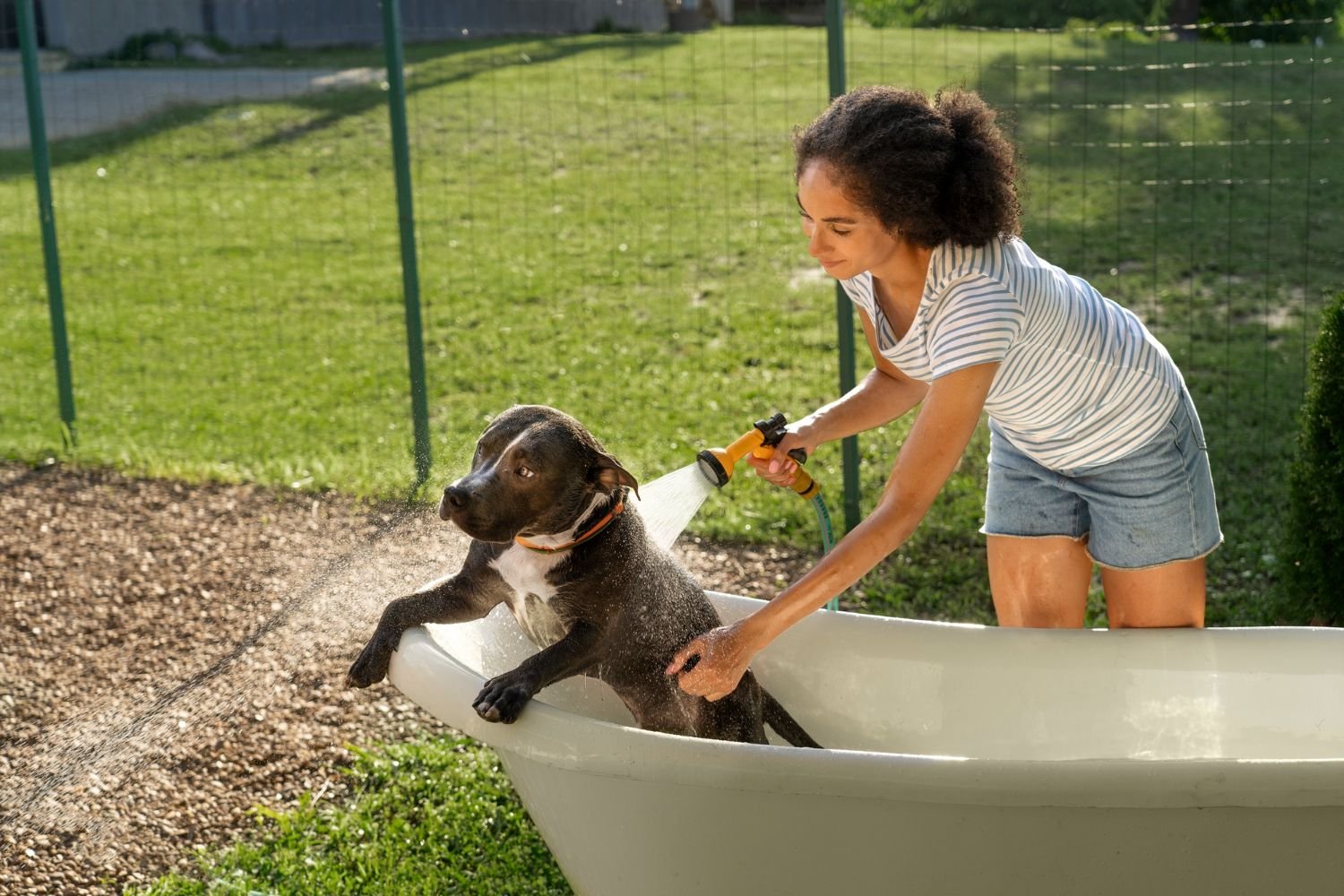
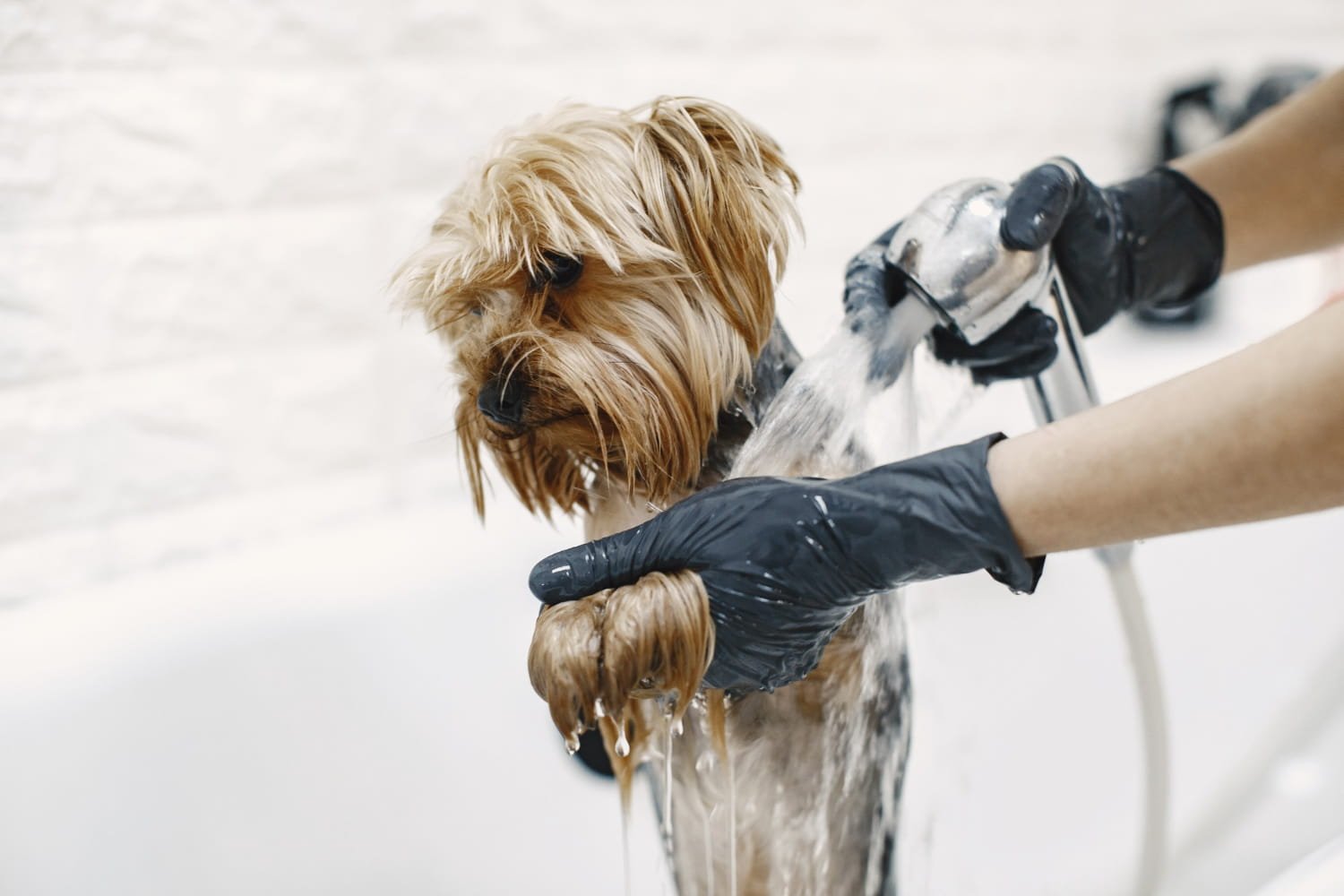
- Introduce water gradually, starting at the paws. Use a soft cup at the feet and legs, pausing often for praise and small treats along the way.
- Work slowly toward the body, skipping the face. For the head and ears, use a damp washcloth rather than pouring water directly over them.
- Apply shampoo with slow, gentle strokes. Massage rather than scrub — a rushed motion often reads as aggressive handling to a dog who’s already on edge.
- Rinse thoroughly, but keep it calm. Leftover shampoo can irritate the skin, so take the time needed to rinse fully while keeping your tone soothing the whole way through.
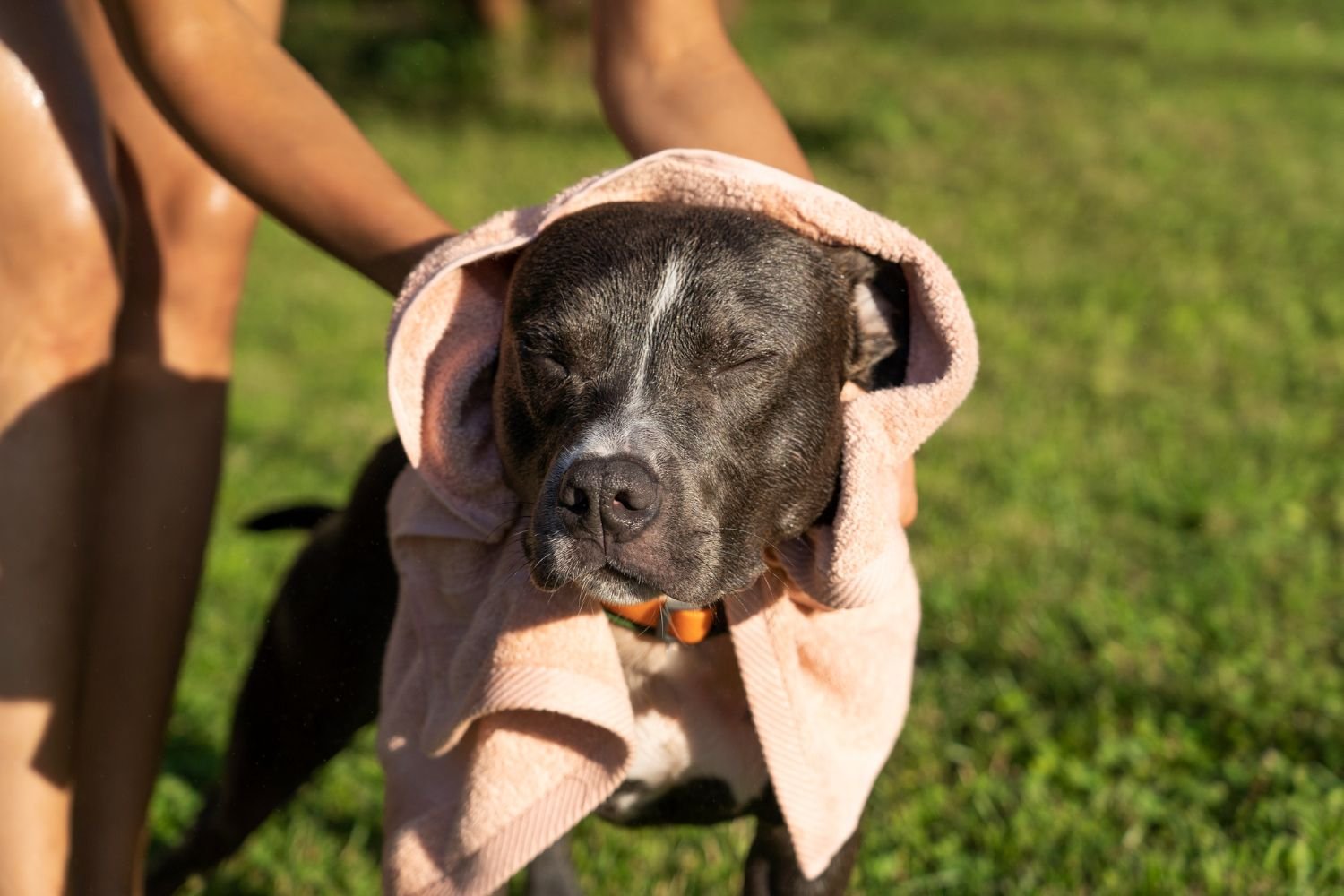
- End the session right after rinsing. Wrap your dog in a warm towel immediately and offer a favorite treat, so the last thing they remember about the bath is something good.
Keeping each session short in the early stages — sometimes just two or three minutes — helps build tolerance without tipping into overwhelm. You can stretch the duration gradually as your dog’s comfort grows across repeated sessions.
Benefits and Drawbacks of a Gentle, At-Home Approach
Benefits
- Builds long-term trust instead of reinforcing the fear you’re trying to fix
- Can allow some routine baths to be handled at home when your dog is comfortable enough for it
- Lets you closely monitor stress signals throughout the entire process
- Gives you full control over water temperature, pressure, and pacing
- Strengthens your bond through calm, patient handling
Drawbacks
- Takes considerably more time than bathing a confident dog
- Requires real, consistent patience — visible progress can take several sessions
- May not fully resolve a severe, long-standing phobia without extra behavioral support
- Can be physically tiring for owners managing a larger or more resistant dog
- Some dogs may still need occasional professional grooming for coat needs home bathing can’t fully address
Understanding both sides sets realistic expectations from the start. Progress with a water-phobic dog is rarely instant, and treating each small improvement as a genuine win keeps the whole process encouraging instead of discouraging.
Extra Tips for Building Long-Term Water Confidence
Practice short, water-free sessions between actual baths — just placing your dog in the empty tub with treats so the space itself stops feeling like a threat. If your dog remains relaxed around water-related sounds, you can introduce them at a very low volume during calm moments outside bath time. Stop or reduce the exposure if your dog shows signs of stress. A handheld sprayer with adjustable pressure is also worth considering, since consistency in equipment helps a nervous dog know exactly what to expect each time.
Positive reinforcement principles apply directly here too, and consistently pairing bath time with your dog’s favorite reward can help create more positive associations with the bathing process over repeated sessions.
AVSAB recommends reward-based approaches for canine training and behavior modification. For a dog that is fearful of bathing, gradual exposure paired with positive reinforcement can be incorporated into a behavior plan that stays within the dog’s comfort level.
When to Bring in a Professional
If your dog’s fear includes aggression, attempts to injure themselves, or extreme panic, stop the bathing attempt and seek professional guidance. A veterinarian can help rule out pain or another medical issue and can advise whether a qualified behavior professional or experienced groomer is appropriate. A dog who is fearful of bathing may also have an underlying medical issue — joint pain that makes standing in the tub uncomfortable, for example. In such cases, a veterinarian’s evaluation may be appropriate before relying on behavioral training alone. Your dog’s physical and emotional well-being always comes before sticking rigidly to a bathing schedule.
Conclusion
Helping a fearful dog get past their anxiety around water takes patience, a calm setup, and a bathing method built around trust rather than speed. Prep your space thoughtfully, bring in water gradually, and reward every small moment of calm — and many dogs can become more comfortable with bath time when the process is introduced gradually and kept within their tolerance. Best Pet Mate sees this less as a chore to rush through and more as an ongoing relationship builder, one that can help your dog become more comfortable with bathing over time, provided the process stays gradual and within their tolerance.
Frequently Asked Questions
How long does it usually take for a water-phobic dog to feel comfortable during baths?
There is no fixed timeline. Some dogs may become more comfortable after several gradual sessions, while dogs with stronger or long-standing fear may need much more time and professional guidance. Work at your dog’s pace and increase the difficulty only when they remain comfortable.
Can I use treats during the bath itself, or only at the end?
Treats work best throughout the bath, at each calm moment, not just at the finish line, since that reinforces relaxed behavior in the moment rather than only rewarding your dog for surviving the whole ordeal.
Is it normal for a dog to shake a lot during bathing even without pain?
Yes, shaking is a common stress response and doesn’t always mean pain, though persistent shaking combined with other distress signals is worth mentioning to your vet.
Can I use dry shampoo instead of a full water bath?
A dog-specific dry shampoo or cleaning product may be useful for temporary cleaning between baths, depending on the product and your dog’s needs. It should not be treated as a replacement for all routine bathing, and products should be used according to their instructions. For a dog with severe bathing fear, ask your veterinarian or a professional groomer about suitable alternatives while you work on gradual desensitization.
What if my dog is afraid of the whole bathroom, not just the water?
Spend time in the bathroom during unrelated calm activities — feeding treats, some gentle play — so the room itself becomes neutral territory before you reintroduce the actual bathing routine.