Quick Answer: Stylish pet beds and crates can become a natural part of your home decor when their colours, materials, shapes and placement complement your existing furniture. Whether your home has a modern, minimalist, rustic or traditional style, you can create an attractive pet-friendly space without sacrificing your pet’s comfort.
A well-planned pet area does not need to look like a separate corner filled with pet accessories. With coordinated bedding, suitable furniture-style crates and organized storage, you can make your pet’s space feel connected to the rest of your home.

1. Choose Pet Beds That Complement Your Interior Style

A pet bed does not have to stand out as a separate piece of furniture. Its colour, shape and fabric can coordinate with your existing interior.
Start by looking at the main colours and materials in your room. If your furniture features neutral shades, a bed in beige, grey, cream or soft brown may blend naturally into the space. In a room with stronger colours, a bed with a complementary shade can add visual interest without making the area look cluttered.
Match the Bed to Your Home’s Style
Modern interiors: Simple shapes, clean edges and understated colours work well with contemporary furniture.
Minimalist interiors: Look for uncomplicated designs, subtle textures and colours that do not compete with the rest of the room.
Rustic interiors: Natural-looking fabrics, warm colours and wooden details can complement rustic furniture.
Scandinavian interiors: Light wood, soft neutral fabrics and simple forms can create a coordinated appearance.
Traditional interiors: Classic shapes, textured upholstery and warm tones can sit comfortably alongside traditional furniture.
The goal is not to make every item identical. A little contrast can make the pet bed look intentional rather than mismatched.
2. Select Colours That Work With Your Existing Decor
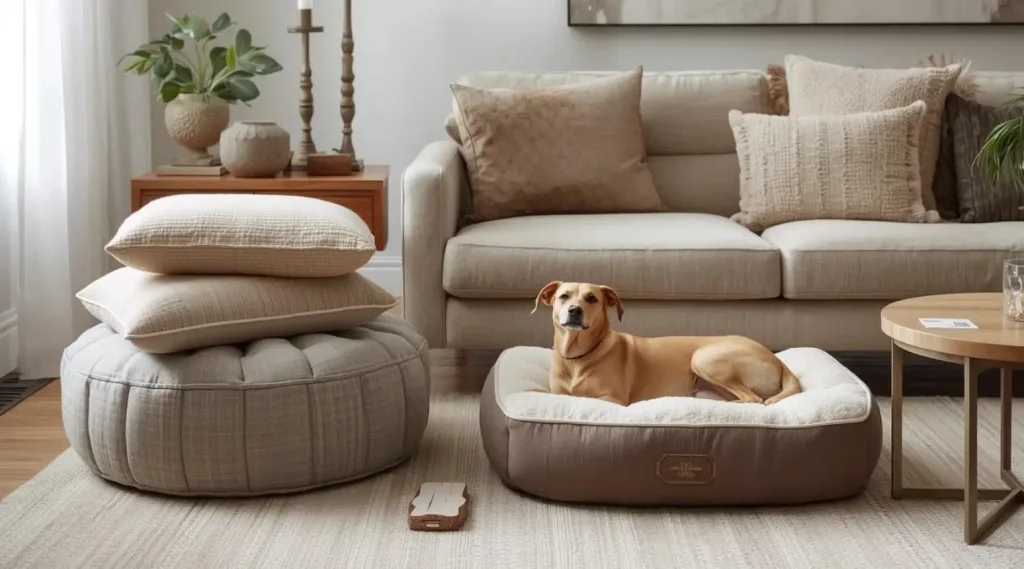
Colour is one of the easiest ways to make pet furniture fit into a room.
Before choosing a bed, consider the colour of your sofa, curtains, flooring, rugs and nearby furniture. You can use a similar shade for a coordinated look or select a complementary colour to create a gentle contrast.
Some commonly used interior colour combinations include:
| Room colour scheme | Pet bed colours that may complement it |
| White and cream | Beige, oatmeal, light grey |
| Grey and charcoal | Soft grey, muted blue, cream |
| Brown and wood tones | Tan, warm beige, chocolate |
| Green and natural tones | Olive, cream, earthy brown |
| Black and white | Grey, black, cream |
Consider Everyday Practicality
Very light fabrics can show dirt and loose hair more visibly, depending on the material and your pet’s coat. Dark fabrics may also show lighter-coloured hair.
Removable, washable covers can make routine cleaning easier. Always check the manufacturer’s washing instructions before cleaning the fabric.
3. Make Pet Crates Look Like Part of the Furniture
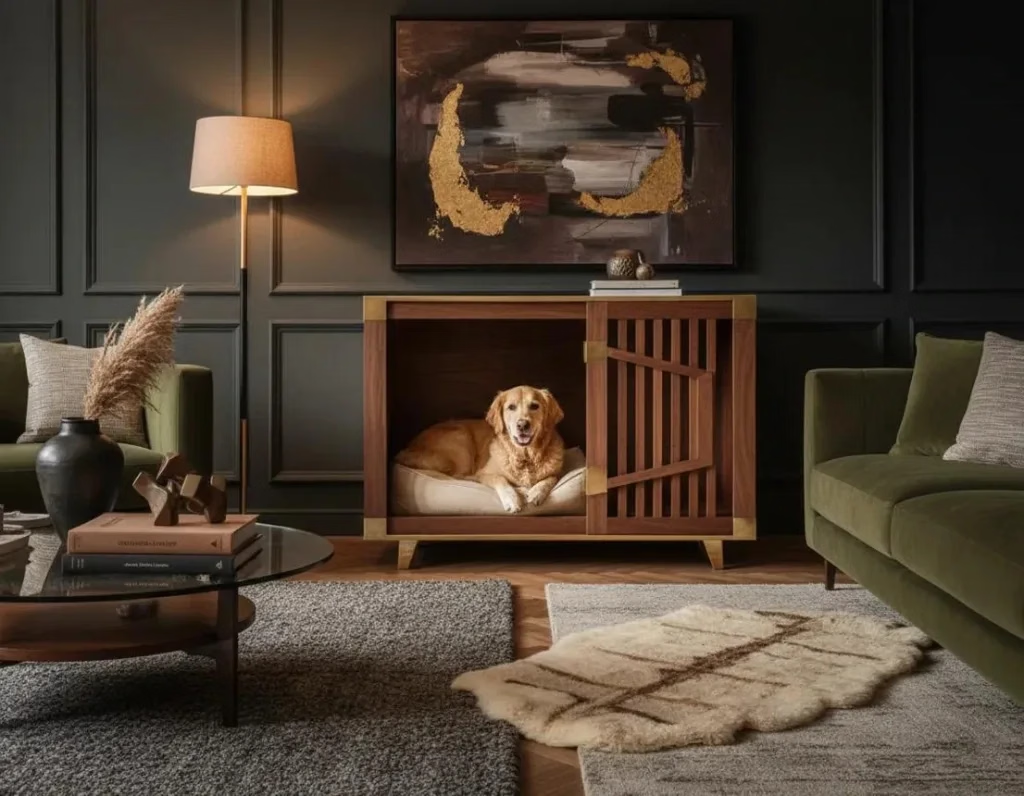
Traditional metal crates can sometimes look visually separate from the rest of a room. Furniture-style crates offer another design approach by incorporating features such as wooden panels, furniture-like frames or tabletop surfaces.
Some designs resemble side tables, cabinets or small console units. This can help the crate coordinate with nearby furniture.
Furniture-Style Crate Designs
Wooden crate furniture: Wooden finishes can complement coffee tables, shelving and other wood furniture.
Cabinet-style crates: These designs often have a more enclosed furniture appearance and may suit rooms where a coordinated look is important.
Minimalist crate designs: Simple frames and restrained finishes can work with contemporary interiors.
Metal and wood combinations: Combining different materials can create a balanced look in rooms with mixed furniture finishes.
Check Practical Features Before Considering Appearance
A crate must remain suitable for its intended use. Do not choose a design simply because it looks attractive.
Check that it provides:
- Enough room for the pet to stand, turn around and lie down comfortably.
- Suitable ventilation and visibility.
- Secure doors and reliable latches.
- Stable construction and smooth, finished edges.
- Easy access for routine cleaning.
- Materials and finishes appropriate for the intended use.
Avoid designs that restrict airflow or create uncomfortable enclosed spaces. Do not use a crate as a decorative storage unit when a pet is inside.
4. Use Pet Furniture That Makes Sense in Small Spaces

In a small apartment, pet furniture needs to fit without making the room feel crowded. A carefully chosen bed or crate can occupy an unused corner or a suitable area beside existing furniture.
Consider these layout ideas:
- Unused corners: A compact bed can make use of an otherwise empty corner.
- Beside the sofa: A pet bed can sit near the main seating area without blocking the walking route.
- Under suitable furniture: A low-profile bed may fit beneath a console or table if there is enough clearance and the area remains comfortable and accessible.
- Dedicated pet corner: A small section of the room can hold a bed, a toy basket and other everyday pet belongings.
- Multi-purpose furniture: Some furniture-style crates include a usable top surface, provided the structure is designed for that purpose and remains stable.
Keep doors, hallways and frequently used pathways clear. Your pet should also be able to reach its resting area without having to squeeze between furniture.
5. Create a Coordinated Pet Corner

A dedicated pet corner can make a room look more organized while keeping everyday pet items in one place.
You do not need a large area. A small arrangement with a comfortable bed, a storage basket and a few coordinated accessories can be enough.
What to Include in a Pet Corner
A comfortable bed: Choose a size and shape that suit your pet’s resting habits.
A storage basket: Keep toys, leads and other frequently used items together.
A feeding area: If practical, place feeding bowls in a separate, easy-to-clean area rather than directly beside the bed.
A washable mat: A suitable mat beneath the pet’s belongings can help define the area and make routine cleaning easier.
Simple decoration: Keep decorative objects limited so the space remains functional.
For cats, make sure the resting area is positioned somewhere they can access comfortably and where they can relax without constant disturbance. For dogs, consider a location that allows them to settle without being in the middle of household traffic.
6. Choose Materials That Suit Your Home and Daily Routine

The material of a pet bed or crate affects both its appearance and everyday maintenance.
Here are some common material considerations:
| Material | Appearance | Practical considerations |
| Cotton fabric | Soft and casual | Check washing instructions and drying requirements |
| Polyester fabric | Available in many colours and textures | Cleaning suitability depends on construction |
| Velvet-style fabric | Smooth and decorative | May require more careful maintenance |
| Wood | Warm and furniture-like | Check for smooth edges and suitable finishes |
| Metal | Simple and structured | Inspect joints, coatings and exposed edges |
| Woven materials | Natural and textured | Check for loose strands and chewing damage |
Material suitability depends on the individual design. A fabric that looks attractive in a showroom may not be convenient for a household with frequent shedding or muddy paws.
For beds, removable covers can be useful. For crates, smooth surfaces and accessible corners can make cleaning more straightforward.
7. Keep Pet Beds and Crates Looking Neat

Even a well-designed pet bed can look out of place if the surrounding area becomes cluttered. A few simple habits can help maintain a tidy appearance.
Simple Styling and Organization Tips
- Straighten bedding regularly: Smooth out covers and reposition cushions after use.
- Keep toys organized: Use a basket or small storage container instead of leaving toys scattered around the room.
- Clean according to care instructions: Wash removable covers and clean crate surfaces as appropriate.
- Check for wear: Look for loose threads, damaged fabric, sharp edges or broken crate components.
- Avoid overcrowding: Leave enough space around the pet’s resting area for easy movement.
- Coordinate accessories: Choose storage containers and mats that work with the room’s existing colours.
A tidy pet corner should still feel like a comfortable space for the animal, not simply a decorative display.
8. Common Decorating Mistakes to Avoid
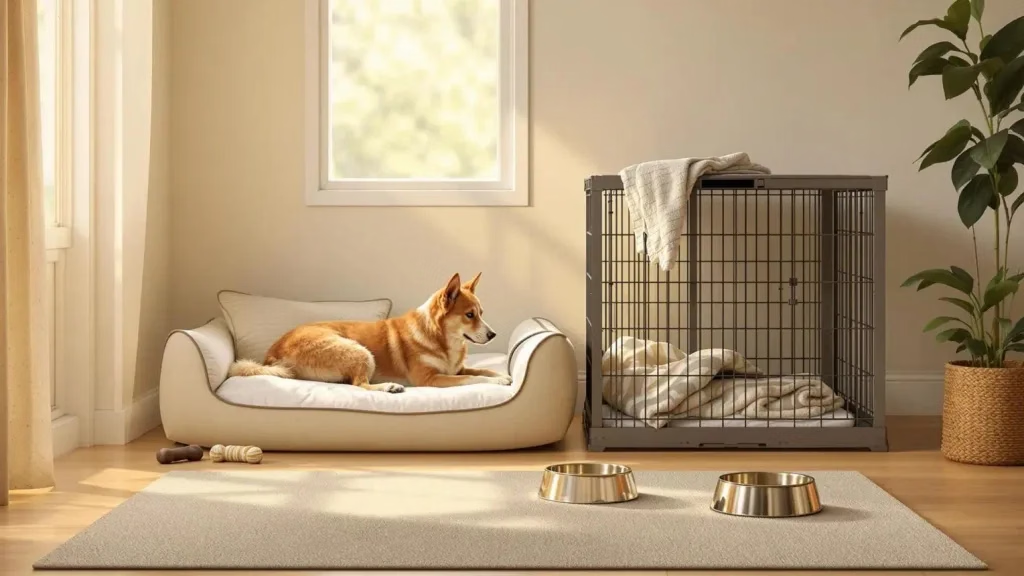
When incorporating pet beds and crates into home decor, appearance should never take priority over comfort and suitability.
Avoid these common mistakes:
- Choosing a bed that is too small: The pet should have enough space to rest in a natural position.
- Prioritizing appearance over ventilation: Crates need adequate airflow and a suitable interior environment.
- Blocking access: Avoid placing beds or crates where doors, drawers or walkways become difficult to use.
- Using unsuitable decorative covers: Do not cover crate openings or restrict visibility and airflow.
- Ignoring cleaning requirements: Materials that are difficult to maintain may become inconvenient in everyday use.
- Placing pet furniture in high-traffic areas: Constant movement can make resting spaces less peaceful.
- Overdecorating the pet area: Too many cushions, ornaments and accessories can make the space difficult to clean and use.
Frequently Asked Questions
How can I make a dog bed match my living room?
Start with the room’s existing colour palette, furniture style and materials. Choose a bed with a complementary colour, suitable shape and fabric that works with your everyday cleaning routine.
Can a dog crate also function as furniture?
Some crates are specifically designed as furniture-style units, such as side-table or cabinet-style designs. However, they must still provide adequate space, ventilation, secure construction and easy access for the dog.
Where should I place a pet bed in the living room?
Choose a calm, accessible location away from busy walkways, frequently opened doors and sources of disturbance. Leave enough room for your pet to enter, leave and rest comfortably.
Are furniture-style dog crates suitable for every dog?
Not necessarily. Suitability depends on the dog’s size, behaviour, comfort and the crate’s construction. The design must provide enough room and ventilation, regardless of its appearance.
How can I organize pet accessories in a small home?
Use a compact basket or storage container for toys, leads and grooming accessories. Keeping frequently used items together can reduce clutter without taking up much floor space.
How often should pet bedding be cleaned?
Cleaning frequency depends on the pet, the bedding material and how quickly it becomes dirty. Follow the manufacturer’s washing instructions and clean it whenever it needs attention, including after spills or visible soiling.