
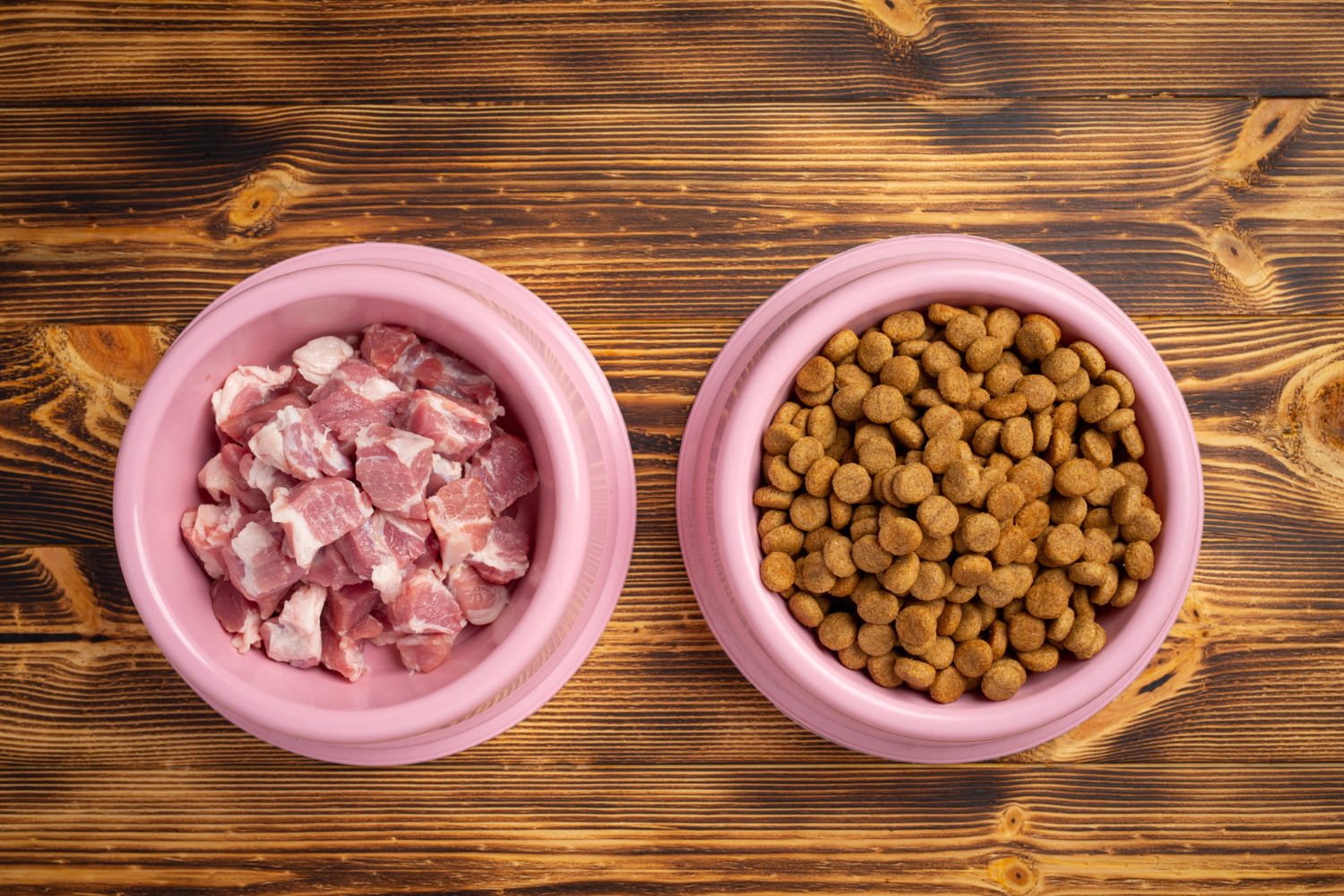
Choosing what to put in your dog’s bowl sounds simple until you start looking at the options.
One pet parent says raw food transformed their dog’s health. Another swears by a high-quality commercial kibble because their dog has eaten it for years and is doing perfectly well. Then there are the endless discussions about ingredients, protein, grains, digestion, preservatives, bones, supplements, and whether dogs should eat food that looks more like what their ancestors ate.
It is enough to make a simple feeding decision feel surprisingly complicated.
The truth is that raw diet vs kibble for dogs is not really a question of which option looks more natural. The more important question is whether the diet provides complete and balanced nutrition for your individual dog, while also being safe and practical for everyone in the household.
Raw diets can appeal to owners who want less processed food and more control over ingredients. Commercial kibble can offer convenience, consistent nutrition, easier portion control, and carefully formulated nutrient profiles. Neither choice should be judged simply by marketing claims or what worked for someone else’s dog.
Why the Raw Diet vs Kibble Debate Is So Confusing
Part of the confusion comes from the way pet food is discussed online.
Raw diets are often described as more natural, more biologically appropriate, or closer to what dogs would eat in the wild. Kibble, on the other hand, is sometimes portrayed as overly processed food with little nutritional value.
Those descriptions leave out a lot of important details.
Dogs are not wild wolves living on whatever prey they happen to catch. They have adapted to living alongside people and can obtain nutrition from a properly balanced diet containing a variety of ingredients. Dogs are considered omnivores and can thrive on appropriately formulated diets that provide the nutrients they need.
At the same time, not every kibble is automatically excellent, and not every raw diet is automatically healthy.
The actual nutritional formulation matters far more than whether the food comes in a bag or arrives in a bowl looking like pieces of meat.
What Does a Raw Diet for Dogs Usually Include?
Raw diets generally contain uncooked animal ingredients such as muscle meat, organs, bones, and sometimes eggs, vegetables, fruits, or supplements.
Some owners prepare these diets at home, while others purchase commercially prepared raw food.
The appeal is easy to understand. You can see the ingredients, control what goes into the bowl, and avoid some ingredients that your dog may not tolerate well.
Some dogs also appear to enjoy raw food very enthusiastically.
However, appearance and enthusiasm do not tell you whether the diet is nutritionally complete.
A homemade raw diet can become deficient or excessive in important nutrients if it is not properly formulated. Veterinary nutrition guidance warns that homemade diets, including raw and cooked versions, commonly fail to provide complete and balanced nutrition when recipes are not professionally formulated.
That matters particularly for puppies, because nutritional imbalances during growth can affect normal bone and skeletal development.
What Is Commercial Kibble?
Commercial kibble is dry pet food produced by manufacturers using a combination of ingredients that are processed and formulated into a consistent product.
A good commercial diet is designed to provide the nutrients a dog needs according to its intended life stage and nutritional requirements.
One of the biggest advantages is consistency.
When you feed the same complete and balanced food each day, you know approximately what your dog is receiving. This makes portion management easier and can also make it simpler to notice changes in appetite, weight, digestion, or other aspects of your dog’s health.
Commercial foods can also be formulated for different needs. Puppies, adult dogs, senior dogs, active dogs, and dogs with particular health concerns may require different nutritional approaches.
That does not mean every bag of kibble is equally suitable. Reading the label, understanding the intended use of the food, and discussing specific nutritional needs with your veterinarian still matter.
Raw Diet vs Kibble for Dogs: Comparing the Main Differences
When comparing the two approaches, it helps to look beyond the ingredient list.
Nutritional Balance
This is probably the most important factor.
A dog’s diet needs the right balance of protein, fat, carbohydrates, vitamins, minerals, and other essential nutrients. Simply adding meat, organs, and bones together does not automatically create a complete diet.
Commercial foods that are properly formulated can make it much easier to meet nutritional requirements because the formulation has already been designed around those needs.
With a homemade raw diet, the responsibility falls on the person preparing the food. Even a diet that looks nutritious can have important nutrient deficiencies or excesses.
If you want to prepare your dog’s food at home, working with a veterinary nutrition professional is a much safer approach than following a random recipe found online.
Food Safety
This is where raw feeding has one of its biggest concerns.
Raw animal products can contain harmful bacteria such as Salmonella and Listeria. The FDA has found that commercially available raw pet foods can carry disease-causing bacteria, and veterinary organizations have raised concerns about the risks to both pets and people who handle these diets.
The concern does not end when your dog finishes the meal.
Dogs eating contaminated raw food can potentially shed bacteria in their stool, which can increase exposure around the household. This makes hygiene especially important in homes with young children, older adults, pregnant people, or individuals with weakened immune systems.
Commercial kibble is not completely free from food safety concerns. Pet food can become contaminated, and products can occasionally be recalled. However, dry commercial food does not carry the same raw meat handling concerns associated with an uncooked diet.
Convenience
This one is difficult to argue with.
Kibble is convenient.
You can measure a portion, put it into the bowl, close the bag, and move on with your day.
Raw feeding generally requires more planning. You may need freezer space, careful storage, controlled thawing, separate preparation areas, and more attention to cleaning.
For a busy household, that difference can become significant over months and years.
A diet only works well if you can follow it consistently.
Cost
The cost of raw feeding can vary enormously.
Some homemade raw diets may appear inexpensive because they use ingredients purchased in larger quantities. However, once you include quality meat, organs, appropriate supplements, storage, preparation, and potential professional formulation, the total cost can become considerably higher.
Commercial kibble also ranges widely in price. A basic food, a premium food, and a veterinary therapeutic diet can have very different costs.
Instead of comparing the price of a bag against the price of a package of meat, consider the total monthly cost of feeding a complete diet.
Digestibility
You may hear people say that raw food is always easier for dogs to digest.
That claim is too broad.
Some dogs may tolerate particular raw diets very well, but digestibility depends on the ingredients, fat content, preparation, formulation, and individual dog.
WSAVA notes that raw meat-based foods are not automatically healthier than commercial or balanced homemade cooked diets, and high-fat diets can cause gastrointestinal problems in some animals.
If your dog has chronic digestive problems, changing to raw food should not be treated as a guaranteed solution.
Potential Benefits of a Carefully Formulated Raw Diet
There are reasons some pet parents prefer raw feeding.
You may have greater control over the ingredients. This can be useful when working with a veterinarian to identify specific food sensitivities.
Some dogs may find raw food highly palatable.
Owners who prepare food themselves may also feel more connected to what their dog is eating because they can see and select individual ingredients.
However, these potential advantages do not prove that raw diets are healthier overall.
WSAVA states that there is currently no evidence showing that raw meat-based diets provide health benefits over commercial diets or balanced homemade cooked diets.
That distinction is important.
A dog enjoying a raw meal does not necessarily mean the diet is nutritionally superior.
Potential Benefits of Commercial Kibble
Commercial kibble has a different set of advantages.
The biggest is consistency.
A properly formulated food can provide a predictable nutritional profile from one meal to the next. This can make everyday feeding considerably easier.
Kibble is also simple to store, transport, measure, and serve. It does not require the same raw meat preparation practices, and it can be especially practical when multiple family members are responsible for feeding the dog.
There is also a wide range of formulas available for different life stages and nutritional needs.
For many families, these practical advantages make commercial kibble a reliable foundation for a dog’s diet.
What About Bones in a Raw Diet?
Bones are often promoted as one of the natural features of raw feeding.
The idea is that chewing bones can provide dental benefits while giving dogs something satisfying to work on.
There are risks, though.
Bones can break teeth, become lodged in the digestive tract, cause obstruction, or contribute to constipation. WSAVA specifically warns about these concerns and notes that feeding bones does not eliminate the need for proper dental care.
A bone looking natural does not automatically make it safe.
If dental health is the goal, talk to your veterinarian about appropriate dental care rather than assuming that bones are a substitute for it.
Is Kibble Too Processed for Dogs?
This is one of the most common arguments against commercial food.
Processing does change ingredients. But the fact that something is processed does not automatically make it unhealthy.
Many foods people eat every day are processed in some way. What matters is what the finished food provides nutritionally, how it is manufactured, how it is stored, and whether it meets the nutritional needs of the animal eating it.
It is also worth remembering that raw food can have problems that are unrelated to processing, particularly bacterial contamination and nutritional imbalance.
Instead of asking whether a food is processed, ask a more useful question:
Does this diet provide complete and balanced nutrition for my dog, and can I feed it safely and consistently?
That question will lead you much closer to a sensible decision.
What About Mixing Raw Food With Kibble?
Some owners feed both.
For example, they may use commercial kibble as the nutritional foundation while adding selected fresh foods or other ingredients.
There is nothing inherently wrong with wanting variety, but adding food to a complete diet can change its overall nutritional balance and calorie intake.
Large amounts of additional food can also make it harder to control your dog’s weight.
If you want to add fresh foods to your dog’s meals, discuss suitable options and portions with your veterinarian, particularly if your dog has allergies, digestive problems, kidney disease, diabetes, or another medical condition.
Which Option Is Better for Puppies?
Puppies deserve extra caution.
Their bodies are developing rapidly, and nutritional mistakes during growth can have serious consequences.
A homemade raw diet that is missing essential nutrients or contains inappropriate mineral levels can interfere with normal development. WSAVA specifically warns that unbalanced raw or homemade diets can be particularly harmful to growing puppies and kittens.
For this reason, puppy nutrition is not the time to experiment with an unbalanced homemade recipe.
If you are considering a raw diet for a puppy, speak with a veterinarian or qualified veterinary nutrition professional before making the change.
How to Choose the Right Food for Your Dog
Instead of asking which feeding style is fashionable, start with your actual dog.
Consider:
Age and Life Stage
A growing puppy has different nutritional needs from an adult or senior dog.
Body Condition
Your dog’s ideal food intake depends partly on their size, activity level, metabolism, and current body condition.
Activity Level
A highly active working dog may require a different calorie intake from a dog who spends most of the day sleeping on the couch.
Health History
Food choices can become more complicated when a dog has allergies, digestive disease, kidney problems, urinary issues, diabetes, or other medical concerns.
Your Household
Think honestly about your ability to store, prepare, and safely handle food. A feeding method that sounds ideal but is difficult to maintain may not be the best long-term choice.
Benefits and Challenges of Choosing Between Raw and Kibble
Benefits
Understanding both approaches allows you to make a decision based on your dog’s actual needs rather than internet trends.
Commercial kibble can provide convenience, consistency, easy storage, and predictable nutrition when you choose an appropriate complete diet.
A carefully formulated raw diet may give owners greater control over ingredients and may be appealing to dogs that strongly prefer fresh foods.
Most importantly, learning about nutrition helps you recognize that the quality and balance of the overall diet matter more than whether the food looks natural.
Challenges and How to Handle Them
It is easy to become overwhelmed by conflicting advice. Focus on reliable veterinary nutrition information rather than social media claims or dramatic before and after stories.
Raw diets require careful food safety practices. If you choose raw feeding, discuss the risks with your veterinarian and take strict precautions when storing, preparing, and serving the food.
Homemade diets can become unbalanced. Do not improvise a long term recipe from a few ingredients. A veterinary nutrition professional can help formulate a diet appropriate for your dog’s needs.
Changing food too quickly can upset digestion. When your veterinarian recommends changing your dog’s diet, transition gradually rather than suddenly replacing the old food.
Conclusion
The debate around raw diet vs kibble for dogs often makes it sound as though one side must be completely right and the other completely wrong.
Real life is not that simple.
A carefully formulated diet that meets your dog’s nutritional requirements is far more important than whether the food is raw or dry. Commercial kibble can be a practical and nutritionally reliable option for many dogs. Raw feeding may appeal to some owners, but it comes with meaningful concerns around bacterial contamination, nutritional balance, safe handling, and bones.
The best choice is the one that supports your dog’s nutritional needs, fits their age and health status, and can be provided safely and consistently.
If you are thinking about switching your dog from kibble to raw food, or from raw food back to commercial food, talk to your veterinarian before making a major change. Your dog’s individual needs should always come before a feeding trend.
After all, the goal is not to feed the most natural-looking food.
The goal is to help your dog stay healthy, comfortable, energetic, and well-nourished for as many years as possible.
Frequently Asked Questions
Is raw food healthier than kibble for dogs?
There is currently no good evidence that raw meat-based diets are healthier than complete commercial diets or properly balanced homemade cooked diets. Raw feeding also carries bacterial and nutritional risks that need to be considered.
Can dogs live on commercial kibble alone?
Yes, a properly formulated complete and balanced commercial food can provide the nutrition a dog needs. The important part is choosing a food appropriate for your dog’s life stage and individual nutritional requirements.
Is raw meat safe for dogs?
Raw meat can contain harmful bacteria and parasites, which can affect pets and people. Veterinary organizations including AAHA and WSAVA have raised concerns about these risks.
Can I feed my dog both raw food and kibble?
Some owners do combine feeding methods, but adding raw food or other ingredients can change the nutritional balance and calorie content of the overall diet. It is best to discuss the amounts with your veterinarian.
Are bones good for dogs’ teeth?
Bones can cause broken teeth, constipation, choking, or digestive obstruction. They should not be considered a replacement for proper dental care.
Is homemade raw food better than commercial raw food?
Neither should automatically be considered better. A homemade diet can be nutritionally incomplete if it is not properly formulated, while commercial raw food still carries food safety concerns. Professional nutritional guidance is especially important when preparing a long-term homemade diet.
Should puppies eat a raw diet?
Puppies have particularly sensitive nutritional requirements because they are growing rapidly. An unbalanced diet can interfere with normal development, so any raw feeding plan for a puppy should be discussed with a veterinarian or veterinary nutrition professional first.
Does kibble cause health problems in dogs?
Kibble itself is not automatically unhealthy. The important factors include the quality and nutritional adequacy of the food, appropriate portions, your dog’s individual needs, and proper storage and handling.
How do I know if my dog’s current food is working?
Look at your dog’s body condition, energy, stool quality, appetite, coat, and overall health. Regular veterinary checkups can also help determine whether the current diet is meeting your dog’s needs.
Should I switch my dog from kibble to raw food?
There is no universal reason that every dog should switch to raw food. If your dog is healthy and doing well on a complete and balanced diet, changing simply because raw feeding is popular may not provide a meaningful benefit. Discuss your dog’s individual situation with your veterinarian before making a major dietary change.