
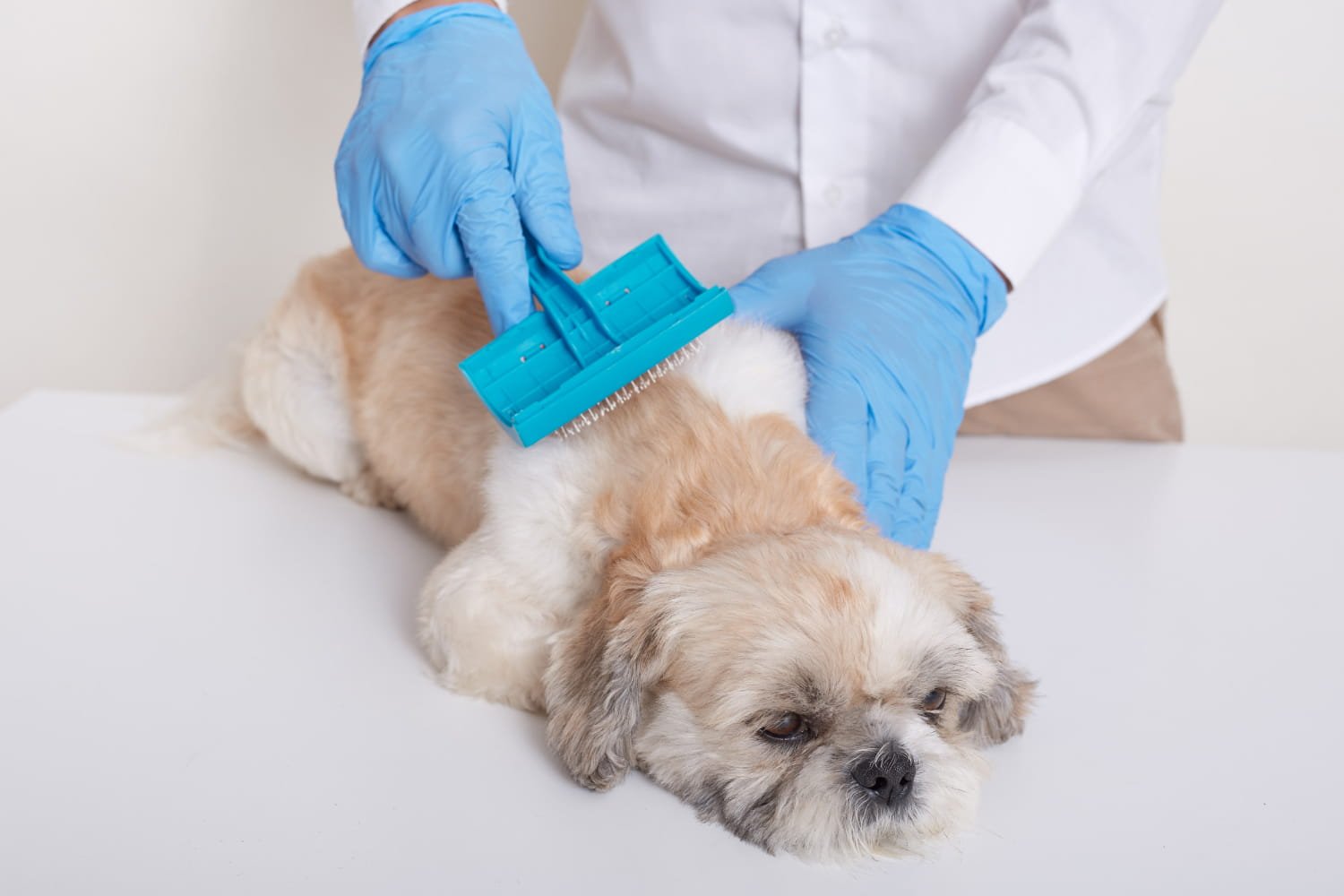
If you live with a dog that seems to leave fur everywhere, you already know how quickly a thick coat can take over the house. You find hair on the sofa, on your clothes, under the furniture, and somehow even in places your dog rarely visits.
For dogs with dense double coats, shedding is a normal part of life. Their undercoat grows thick and then releases in large amounts during seasonal changes. The problem is not the shedding itself. The real challenge is helping your dog remove loose undercoat without damaging the skin or turning grooming into an uncomfortable experience.
Learning the right approach to de-shedding a dog’s undercoat can make a noticeable difference. With suitable tools, patience, and a little knowledge about your dog’s coat, you can remove loose fur at home while keeping the grooming session comfortable.
You do not need to attack every loose hair at once. In fact, trying to force out a thick undercoat quickly is one of the easiest ways to irritate your dog’s skin.
The goal is simple: remove loose hair gradually while protecting the healthy coat and skin underneath.
Why Dogs Develop Such Thick Undercoats
A dog’s double coat usually has two main layers.
The outer coat contains longer guard hairs that help protect the skin from the environment. Underneath is a softer, denser layer of fur called the undercoat.
The undercoat helps with temperature regulation by providing insulation. Many breeds developed dense undercoats because their original environments exposed them to cold weather or changing temperatures.
Breeds such as Huskies, Golden Retrievers, German Shepherds, Australian Shepherds, Border Collies, and many other double-coated dogs can produce substantial amounts of undercoat.
During heavy shedding periods, the loose undercoat can come away in large tufts.
That does not necessarily mean something is wrong.
A healthy dog can shed heavily and still have perfectly healthy skin and coat.
How Often Should You De-shed a Thick Undercoat?
There is no single schedule that works for every dog.
Some dogs need light brushing several times a week, while others may benefit from more frequent grooming during their heaviest shedding periods.
The important thing is to avoid treating de-shedding as something you only do when the coat has already become packed with loose fur.
Regular brushing removes loose hair before it collects and becomes tangled with the surrounding coat.
During seasonal shedding, you may need shorter grooming sessions more frequently rather than one extremely long session.
That approach is usually easier on both you and your dog.
What You Need Before You Start
Having the right tools makes the entire process easier.
You do not need every grooming tool available at the pet store. Start with equipment suited to your dog’s coat.
Undercoat Rake
An undercoat rake is designed to reach through the outer coat and remove loose undercoat.
Choose one that is appropriate for your dog’s coat density and length. The teeth should be able to reach the undercoat without aggressively scraping the skin.
Slicker Brush
A slicker brush can help remove loose hair, small tangles, and debris from the coat.
Use gentle pressure. The goal is not to brush as hard as possible.
Metal Comb
A metal comb can help you check whether the coat is actually free of tangles after brushing.
If the comb moves smoothly through the coat, that is a good sign.
If it catches repeatedly, there may still be areas that need attention.
Grooming Towels
If you plan to bathe your dog afterward, keep several towels nearby.
A wet double coat can hold a surprising amount of water.
Dog Shampoo
If bathing is part of your grooming routine, use a shampoo made specifically for dogs. Human shampoos are not ideal because dogs have different skin needs.
Start With a Calm Dog
The safest grooming session begins before the brush touches the coat.
If your dog is nervous about grooming, rushing straight into heavy brushing can create a negative association.
Let your dog see and smell the grooming tools.
Reward calm behavior.
Touch different parts of the body gently before beginning.
If your dog becomes uncomfortable, pause for a moment.
This is particularly important around sensitive areas such as the belly, legs, tail, ears, and hips.
A grooming session does not have to be completed in one attempt.
For a dog that strongly dislikes brushing, several short and positive sessions can work much better than one long struggle.
How to Safely De-Shed Your Dog’s Undercoat
Step 1: Check the Coat First
Before using an undercoat tool, run your hands gently over the coat.
Look for mats, tangles, irritated skin, small wounds, ticks, lumps, or areas where your dog reacts negatively to touch.
Do not simply brush over a painful area.
If you find significant matting close to the skin, it may be safer to have a professional groomer handle it.
Trying to pull apart a tight mat can hurt the skin underneath.
Step 2: Brush in the Direction of Hair Growth
Start with gentle strokes in the natural direction of the coat.
Do not immediately dig the tool deep into the fur.
Work through one small section at a time.
If your dog has an especially dense coat, separate the outer hair gently with your free hand and work through the underlying fur in manageable sections.
The brush should be doing the work.
You should not need to use force.
Step 3: Use the Undercoat Rake Carefully
Once the outer coat has been loosened, use the undercoat rake to reach the loose undercoat.
Move slowly.
A few gentle passes over one section are better than repeatedly dragging the tool through the same area.
Pay attention to your dog’s body language.
If your dog turns around, tries to move away, repeatedly looks at your hand, flattens their ears, or shows other signs of discomfort, take a break and reassess your technique.
A good de-shedding session should remove loose fur without leaving the skin sore.
Step 4: Work Around Sensitive Areas
The chest, belly, legs, armpits, tail, and area behind the ears can be more delicate.
These areas also tend to develop tangles.
Use a softer brush and lighter pressure where appropriate.
Never assume that because a tool works well on your dog’s back, it should be used with the same pressure everywhere else.
The skin is not equally tolerant across the entire body.
Step 5: Finish With a Comb
After brushing, use a metal comb to check the coat.
Move slowly through different sections.
If the comb passes easily, you have probably done a good job removing loose hair and working through minor tangles.
If it repeatedly catches, investigate that area rather than simply pulling harder.
The comb is also useful for finding small tangles that may not be obvious when you look at the coat from the outside.
Should You Bathe Your Dog Before or After De Shedding?
For many dogs, bathing can be useful after loose undercoat has been removed.
However, the exact order depends on the condition of the coat and the grooming method being used.
A thorough brushing before the bath can remove a substantial amount of loose fur and prevent some of it from collecting in the tub.
After bathing, the coat should be dried thoroughly and brushed again once appropriate.
This matters because moisture can make a dense coat feel heavier and can contribute to tangling if the coat is left damp.
Never leave a thick double-coated dog wet for an extended period.
Dry the coat carefully and make sure the skin underneath is not remaining damp.
Why You Should Not Shave a Double Coated Dog
Some owners consider shaving a thick-coated dog during heavy shedding because it seems like an easy way to deal with all the fur.
In most cases, shaving is not the solution.
The outer coat and undercoat serve different purposes, and removing the entire coat does not simply switch off shedding.
For double-coated dogs, shaving can also change the appearance and texture of regrowing hair. More importantly, the coat provides protection from environmental exposure.
If you are considering shaving because your dog’s coat is severely matted or there is a medical reason, discuss the situation with a professional groomer or veterinarian rather than doing it yourself.
Common Mistakes When De Shedding Dogs
Brushing Too Aggressively
More pressure does not mean more loose hair will come out safely.
Aggressive brushing can irritate the skin and make your dog associate grooming with discomfort.
Staying on One Spot Too Long
If you keep brushing the same section because you can still see loose fur, you may eventually start brushing the healthy coat rather than just removing loose undercoat.
Move around the body and return to difficult areas later.
Trying to Remove Every Loose Hair
This is almost impossible during heavy shedding.
A dog can continue releasing loose fur after a grooming session because shedding is a natural process.
The goal is to reduce excess loose hair, not make your dog completely shed-free.
Using the Wrong Tool
A tool designed for one coat type may not be appropriate for another.
Dogs have different coat textures, lengths, and densities.
If you are unsure which tool is suitable, ask a professional groomer to demonstrate how it should be used on your dog’s particular coat.
Ignoring the Skin
It is easy to focus entirely on the amount of fur coming off the brush.
Do not forget to check the skin.
Redness, sores, excessive dandruff, unusual odor, scabs, parasites, or repeated sensitivity should not simply be brushed away.
When You Should Stop Grooming and Call a Professional
Home grooming is useful, but it has limits.
If your dog’s coat is heavily matted, tightly packed, or pulling against the skin, professional help may be the safest option.
You should also speak with a veterinarian if your dog’s shedding suddenly becomes much heavier than normal or is accompanied by bald patches, intense itching, redness, sores, changes in skin color, or other unusual symptoms.
Heavy seasonal shedding can be completely normal.
Sudden changes in coat or skin condition deserve more attention.
A professional groomer can also teach you how to use specific tools correctly. One short demonstration can save you from accidentally causing discomfort during future grooming sessions.
How to Make De-shedding Easier for Your Dog
The best grooming routine is one your dog can tolerate comfortably.
Keep sessions reasonably short.
Use rewards for calm behavior.
Take breaks.
Start with areas your dog is comfortable having touched and gradually work toward more sensitive areas.
If your dog becomes overwhelmed, stop before the session turns into a struggle.
Over time, your dog can learn that brushing does not mean something unpleasant is about to happen.
You may also find that grooming after a walk works better for an energetic dog because they are more relaxed afterward.
Every dog is different.
There is no prize for completing the longest grooming session.
Benefits and Challenges of De Shedding at Home
Benefits
Regular de-shedding can reduce the amount of loose fur around your home.
It can also help you notice small changes in your dog’s skin or coat before they become obvious.
Brushing allows you to check for tangles, parasites, lumps, irritated areas, and unusual sensitivity.
For many dogs, regular grooming also becomes a bonding activity once they learn to relax during it.
There is another practical advantage.
When you remove loose undercoat regularly, you may find that the coat becomes easier to manage between baths and less likely to develop small tangles.
Challenges and How to Handle Them
Your dog refuses to sit still. Keep sessions short and reward calm behavior rather than trying to hold your dog in place for a long period.
The undercoat seems endless. Accept that heavy shedding can take several sessions. Do not keep brushing one area aggressively just because loose fur is still coming out.
Your dog becomes uncomfortable. Reduce pressure, change tools, or stop for the day. Pain during grooming should never be treated as something your dog simply needs to tolerate.
You keep finding mats. Check the coat more frequently and pay particular attention to areas where friction occurs. Severe mats should be handled by a professional.
You are unsure whether the shedding is normal. Compare the current coat with your dog’s usual shedding pattern and speak with a veterinarian if there are sudden or unusual changes.
A Simple Weekly Grooming Routine
For a dog with a thick double coat, consistency can make grooming much easier.
Start with a quick visual and hands-on check of the coat.
Brush gently through the larger areas of the body.
Use an undercoat rake where loose undercoat is present.
Check the legs, belly, chest, tail, and behind the ears separately.
Finish with a comb to check for remaining tangles.
Give your dog a reward and end the session while they are still comfortable.
During heavy seasonal shedding, you may need to repeat this routine more often.
The exact schedule depends on your dog’s breed, coat, lifestyle, and individual shedding pattern.
Conclusion
Learning to de-shed a dog’s undercoat is less about finding the strongest grooming tool and more about using the right technique.
A thick double coat needs patience.
Start by checking the skin and coat, remove tangles carefully, use gentle strokes, work in small sections, and pay extra attention to sensitive areas. Do not try to remove every last loose hair, and never assume that aggressive brushing is better brushing.
Regular grooming can make shedding much easier to manage while giving you a chance to notice changes in your dog’s skin and coat.
Most importantly, pay attention to your dog.
If they are relaxed, comfortable, and willing to return for another grooming session, you are probably on the right track.
A clean brush full of loose fur is satisfying, but your dog’s comfort matters more than how much hair you manage to remove.
Frequently Asked Questions
How often should I de-shed my dog?
The ideal frequency depends on your dog’s breed, coat type, and shedding pattern. Dogs with thick double coats may need brushing several times a week during heavy shedding periods, while lighter maintenance may be enough at other times.
Can I use an undercoat rake on my dog every day?
An undercoat rake should not automatically be used every day. Frequent aggressive use can irritate the skin or remove healthy coat. Use it when loose undercoat needs to be removed and keep the pressure gentle.
Should I brush my dog before or after a bath?
Brushing before a bath can help remove loose fur and minor tangles. After bathing, the coat should be dried thoroughly and brushed again when appropriate. Dense coats should not be left damp for long periods.
Can I shave my dog to stop shedding?
Shaving does not stop the natural shedding process. Double-coated dogs also rely on their coats for protection and insulation. If shaving seems necessary because of severe matting or another problem, speak with a professional groomer or veterinarian first.
Why is my dog still shedding after I brushed them?
Brushing removes loose hair that is ready to come out, but it does not stop the normal hair growth and shedding cycle. During heavy seasonal shedding, your dog may continue releasing loose undercoat even after a thorough grooming session.
What is the best brush for a dog with a thick undercoat?
An undercoat rake can be useful for dense double coats, while a slicker brush and metal comb can help with surface brushing and checking for tangles. The best combination depends on your dog’s coat length, texture, and density.
How do I know if I am brushing too hard?
Watch your dog’s skin and body language. If your dog repeatedly pulls away, reacts as though the brushing hurts, or develops redness or irritation, reduce the pressure and reassess your technique. Grooming should not cause pain.
Can de-shedding help reduce dog hair around the house?
Yes. Regular brushing can remove a significant amount of loose fur before it ends up on furniture, floors, clothing, and bedding. It cannot eliminate shedding completely because shedding is a natural process.
What should I do if my dog’s undercoat is badly matted?
Do not aggressively pull through severe mats with a brush or rake. Tight mats can pull on the skin and make grooming painful. A professional groomer can safely assess the coat and determine the best way to remove the mats.
When is excessive shedding a reason to see a veterinarian?
If shedding suddenly becomes much heavier than your dog’s normal pattern, especially when accompanied by bald patches, intense itching, redness, sores, scabs, unusual skin odor, or other changes, contact your veterinarian. These signs may indicate a skin or health problem rather than ordinary seasonal shedding.